
Key Takeaways
- There was no $2 billion US Commerce Department package for Middle Corridor financing; this article has been corrected.
- The US allocated $201 million to a Trans-Caspian Enterprise Fund in August 2026 to attract private investment along the corridor.
- The World Bank backed a $1.41 billion KTZ rail financing in Kazakhstan and a €1.67 billion loan for Istanbul’s North Rail Crossing.
- The EU launched a platform in June 2026 expected to mobilize up to €2 billion for connectivity.
Correction (November 16, 2026): An earlier version of this article said the US Department of Commerce had announced a $2 billion financing package for the Middle Corridor. We could not confirm any such announcement and have corrected the article and its headline.
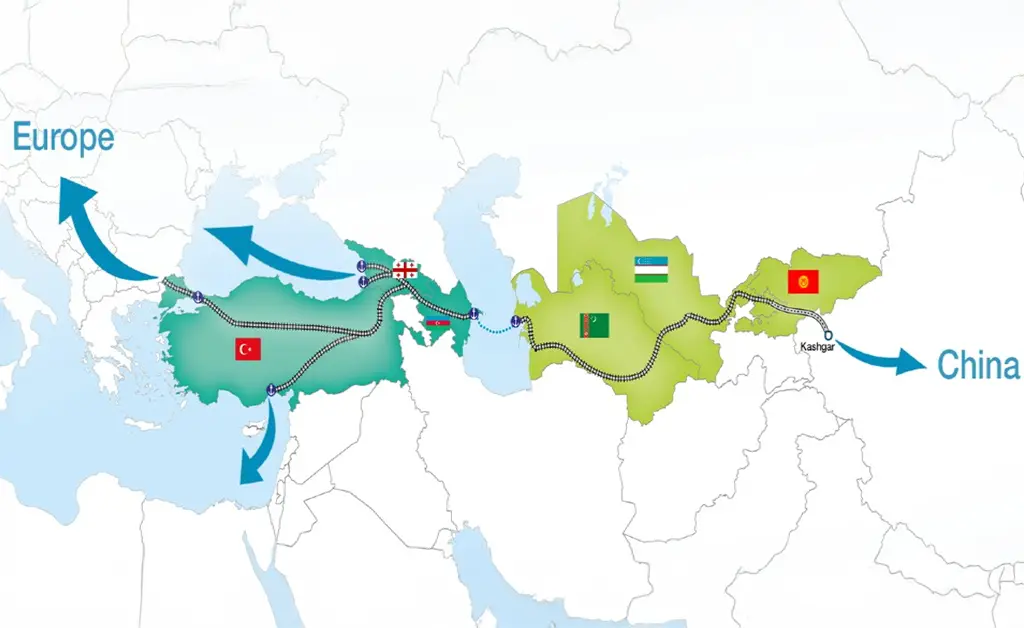
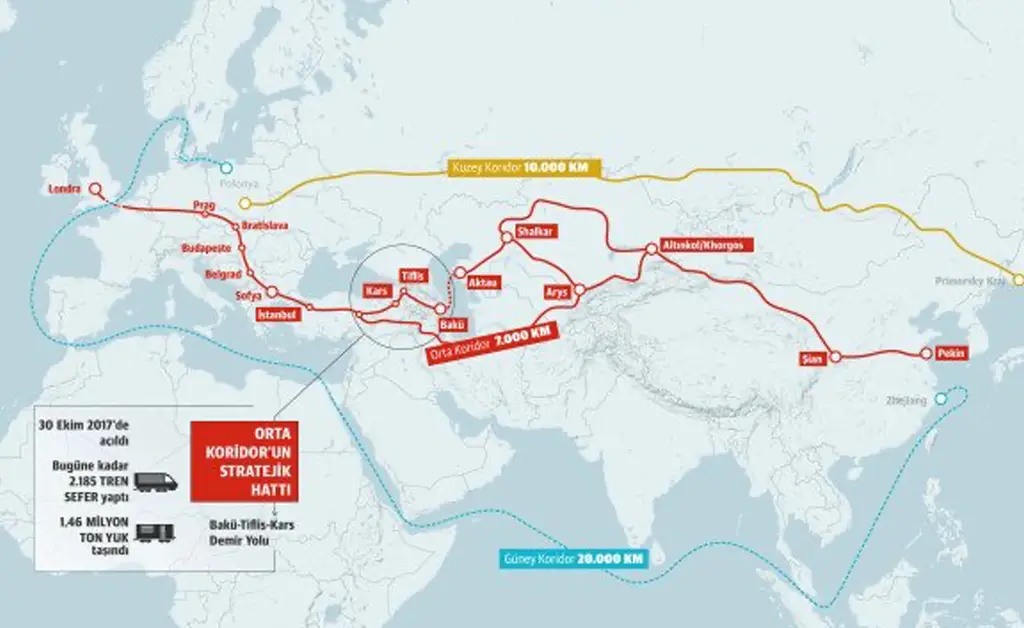
Financing for the Trans-Caspian International Transport Route, known as the Middle Corridor, is arriving from several directions at once. In April 2026, Türkiye signed a €1.67 billion financing agreement with the World Bank for the Istanbul North Rail Crossing (INRAIL), a project with total investment expected to exceed $8 billion that would raise rail freight capacity across the Bosphorus from 3 million to 50 million tons a year, according to the Caspian Policy Center. In February 2026, the World Bank approved an $846 million guarantee to help Kazakhstan’s railway KTZ raise $1.41 billion for a new Middle Corridor line.
In This Article
How Is the US Supporting the Middle Corridor?
The United States has added its own vehicle. In August 2026, Washington allocated $201 million to the Trans-Caspian Enterprise Fund to attract private investment along the Middle Corridor in the South Caucasus and Central Asia, Trend reported. A State Department official described the fund as a private nonprofit entity, Euronews reported. US industry is also involved directly: Wabtec is supplying locomotives to Kazakhstan under a $4.2 billion order.
What Is Europe Funding on the Middle Corridor?
Europe is investing too. On June 23, 2026, the European Commission launched a Connectivity Agenda Platform, with statements of intent from international financial institutions expected to mobilize up to €2 billion ($2.3 billion) for transport, border-crossing and trade-facilitation projects, The Times of Central Asia reported.
Middle Corridor Financing, 2026
| Source | Project or vehicle | Amount |
|---|---|---|
| World Bank (IBRD) + AIIB | KTZ Middle Corridor rail, Kazakhstan | $846M + $564M guarantees; $1.41B financing |
| World Bank | Istanbul North Rail Crossing (INRAIL), Türkiye | €1.67B financing; >$8B total project |
| European Commission | Connectivity Agenda Platform | Up to €2B expected |
| US government | Trans-Caspian Enterprise Fund | $201M |
| Wabtec (US) | Locomotives for KTZ | $4.2B order |
Why Does the Middle Corridor Matter Geopolitically?
The strategic logic is to reduce dependence on routes through Russia while linking Central Asia and the South Caucasus more closely with Europe and the United States. Türkiye is the corridor’s western gateway, and the TRIPP route through southern Armenia would add a new link between mainland Azerbaijan, Nakhchivan and Türkiye.
How Competitive Is the Middle Corridor on Cost?
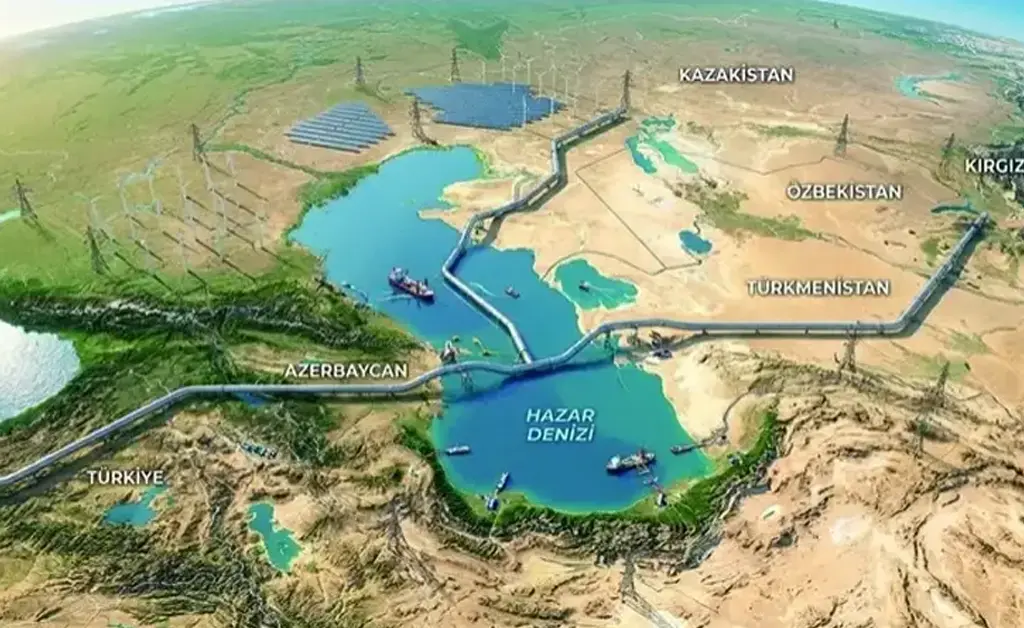
Volumes are rising but costs remain a hurdle. President Kassym-Jomart Tokayev said Kazakhstan has spent more than $35 billion on transport and logistics over 15 years and that annual cargo on the corridor rose from 0.8 million to 4.1 million tonnes since 2019, while a 40-foot container cost $3,500 to $4,500 on the middle route in 2025 against $2,800 to $3,200 through Russia, Emerging Europe reported.
What This Means for Turkish American and Turkic Businesses
For US logistics, rail and technology firms, the Middle Corridor now has multiple financing sources, from the World Bank and EU platforms to the US Trans-Caspian Enterprise Fund. Procurement under these programs is the opening to watch.
Turkish American, Azerbaijani American and Central Asian American traders should weigh transit time against cost: the middle route was still more expensive than routes through Russia in 2025. This article is for information only and is not financial advice.
Frequently Asked Questions
Did the US commit $2 billion to the Middle Corridor?
No such US Commerce Department package could be confirmed. In August 2026, the US allocated $201 million to the Trans-Caspian Enterprise Fund to attract private investment along the corridor.
What is the Trans-Caspian Enterprise Fund?
It is a US government-funded vehicle, capitalized with $201 million, designed to spur private investment along the Middle Corridor across the South Caucasus and Central Asia.
Is the Middle Corridor cheaper than routes through Russia?
Not yet. A 40-foot container cost $3,500 to $4,500 on the middle route in 2025, compared with $2,800 to $3,200 through Russia, according to Emerging Europe.
Sources
- Caspian Policy Center, Headlines From the Caspian: April 20, 2026, April 20, 2026. Accessed November 16, 2026.
- World Bank, World Bank Support to Enhance Rail Connectivity and Logistics in Kazakhstan, February 19, 2026. Accessed November 16, 2026.
- Trend News Agency, TRIPP Moves From Concept to Reality as US Allocates $201 Million for Middle Corridor, August 10, 2026. Accessed November 16, 2026.
- Euronews, The Business of Peace: US Investment Push Takes the TRIPP Corridor From Diplomacy to Trade, September 25, 2026. Accessed November 16, 2026.
- The Times of Central Asia, EU Launches Platform to Mobilize Up to €2 Billion for Europe-Central Asia Connectivity, June 24, 2026. Accessed November 16, 2026.
- Emerging Europe, Bridge Over Troubled Water, 2026. Accessed November 16, 2026.
- Wabtec, Kazakhstan Awards Wabtec a $4.2 Billion Locomotive Order, September 22, 2025. Accessed November 16, 2026.
Related Coverage
- Trans-Caspian Cable Goes Live, Giving Central Asia an Internet Route That Bypasses Russia
- Wabtec and World Bank Back Kazakhstan’s Middle Corridor Rail Expansion
- All American Rail Group Signs $3B Kyrgyzstan Railway Deal Tied to Trans Caspian Corridor
About the American-Turkic Republics Business Alliance (ATBA)
The American-Turkic Republics Business Alliance (ATBA) is a New York-based nonprofit platform that strengthens trade, investment and business collaboration between the United States and the Turkic republics: Türkiye, Azerbaijan, Kazakhstan, Uzbekistan, Kyrgyzstan and Turkmenistan. Companies and professionals can join the network through ATBA membership.
