
Key Takeaways
- H.R. 1024, the US-Kazakhstan Trade Modernization Act, was introduced on February 5, 2025, and sits with the House Ways and Means Committee.
- The bill would let the President end Jackson-Vanik (Title IV of the Trade Act of 1974) for Kazakhstan and proclaim permanent normal trade relations.
- Kazakhstan has had normal trade relations since 1992 and full emigration compliance since 1997, so the change is mainly about legal certainty, not tariff cuts.
- A House delegation led by Ways and Means Chairman Jason Smith met President Tokayev in Astana on August 25, 2026.
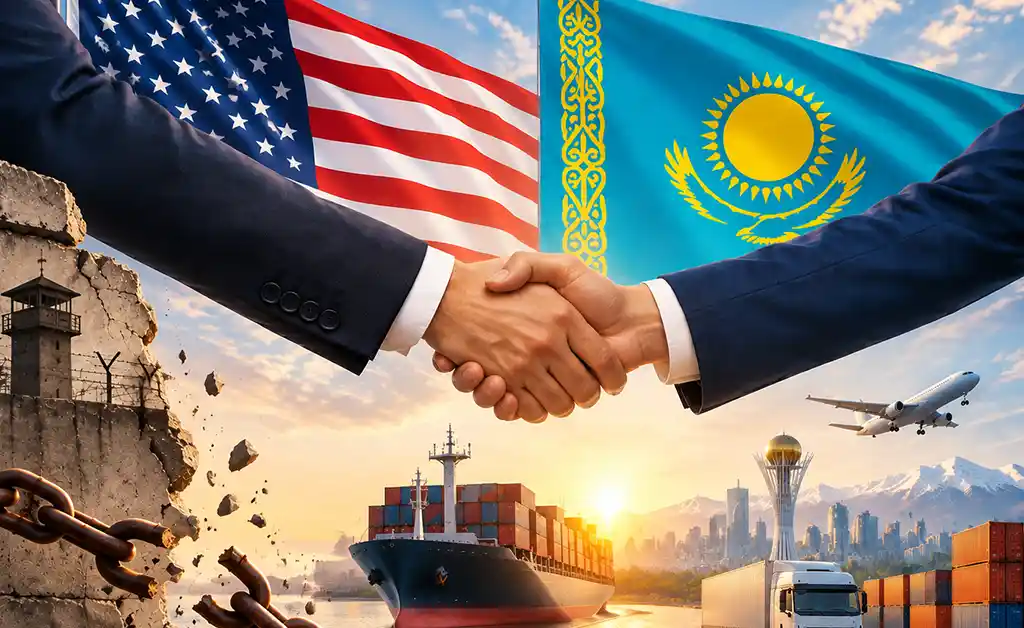
H.R. 1024, the US-Kazakhstan Trade Modernization Act, would let the President end the application of the Jackson-Vanik amendment to Kazakhstan and grant the country permanent normal trade relations (PNTR). The bill was introduced on February 5, 2025, by Rep. Jimmy Panetta and referred to the House Ways and Means Committee, which has jurisdiction over it.
In This Article
The issue gained attention after a bipartisan six-member House delegation led by Ways and Means Chairman Jason Smith met President Kassym-Jomart Tokayev in Astana on August 25, 2026. The delegation included Greg Murphy, Carol Miller, Ronny Jackson, Wesley Bell and Ed Case. The public account of the meeting covered nuclear security, trade, investment and technology, but did not mention Jackson-Vanik, The Times of Central Asia reported. Miller is an original cosponsor of H.R. 1024.
What Is the Jackson-Vanik Amendment and How Does It Affect Kazakhstan?
The Jackson-Vanik amendment is part of Title IV of the Trade Act of 1974. It ties normal trade relations for certain former Soviet-bloc economies to freedom of emigration. According to the bill’s findings, Kazakhstan has had normal trade relations treatment since 1992 and has been in full compliance with the emigration requirements since 1997. It joined the World Trade Organization on November 30, 2015.
In practice, Kazakh goods already receive normal tariff treatment. The issue is that this status remains conditional under a Cold War-era statute instead of being permanent.
What Would H.R. 1024 Change?
Section 3 of the bill allows the President to determine that Title IV should no longer apply to Kazakhstan and then proclaim permanent normal trade relations for Kazakh products. Once that happens, Title IV stops applying to Kazakhstan. The bill contains no new reporting requirements.
H.R. 1024 at a Glance
| Item | Detail |
|---|---|
| Official title | US-Kazakhstan Trade Modernization Act |
| Introduced | February 5, 2025, by Rep. Jimmy Panetta |
| Committee | House Ways and Means |
| Mechanism | Presidential determination and proclamation of normal trade relations; Title IV then ceases to apply |
| Covers | Kazakhstan only |
| Status | Referred to committee |
What Would H.R. 1024 Change for US Exporters?
Because tariff treatment is already normal, H.R. 1024 would not cut duties on most goods. Its main effect would be to remove legal uncertainty. Exporters, lenders and insurers that write long-term contracts in Kazakhstan would no longer need to note a conditional trade status in country risk reviews, and Washington would send a clearer signal of long-term commitment.
The stakes have grown with US interest in Kazakh resources. Kazakhstan supplied 28% of the uranium delivered to US civilian nuclear reactors in 2025, second only to Canada, according to the US Energy Information Administration.
What This Means for Turkish American and Turkic Businesses
For US exporters already selling to Kazakhstan, H.R. 1024 would not change day-to-day duties, but it would remove a legal reservation that can affect long-term financing and insurance. Companies planning multi-year projects can raise the issue with EXIM, DFC and industry associations.
Kazakh American and Turkish American business owners can follow the bill’s cosponsors and committee action and share concrete examples of how conditional status affects their deals. This article is for information only and is not legal advice.
Frequently Asked Questions
What does H.R. 1024 do?
H.R. 1024, the US-Kazakhstan Trade Modernization Act, would allow the President to determine that Title IV of the Trade Act of 1974, the Jackson-Vanik amendment, no longer applies to Kazakhstan and to proclaim permanent normal trade relations for Kazakh products.
Does Kazakhstan already have normal trade relations with the US?
Yes. According to the bill’s findings, Kazakhstan has had normal trade relations treatment since 1992 and has fully complied with Jackson-Vanik emigration requirements since 1997. The status is conditional, not permanent.
Who introduced H.R. 1024?
Rep. Jimmy Panetta introduced H.R. 1024 on February 5, 2025, with bipartisan cosponsors including Rep. Carol Miller. The bill was referred to the House Ways and Means Committee.
Sources
- US Congress (text via BillSponsor), H.R. 1024, US-Kazakhstan Trade Modernization Act (Introduced in House), February 5, 2025. Accessed November 16, 2026.
- The Times of Central Asia, Bipartisan U.S. Congressional Visit Highlights Expanding Partnership with Kazakhstan, August 2026. Accessed November 16, 2026.
- Office of Rep. Jimmy Panetta, Reps. Panetta, Aderholt, Titus, LaHood, Bera, and Suozzi Reintroduce U.S.-Kazakhstan Trade Modernization Act, February 6, 2025. Accessed November 16, 2026.
- US Energy Information Administration, Today in Energy: Uranium delivered to US nuclear plants in 2025, 2026. Accessed November 16, 2026.
Related Coverage
- Congress Just Made the Case for Ending Jackson-Vanik for Kazakhstan — What It Means for US Exporters
- New U.S. Tariff Rules Reshape Kazakhstan–America Trade Outlook
- Kazakhstan’s $78.6 Billion Investment Cycle: A Sector-by-Sector Guide for US Exporters
About the American-Turkic Republics Business Alliance (ATBA)
The American-Turkic Republics Business Alliance (ATBA) is a New York-based nonprofit platform that strengthens trade, investment and business collaboration between the United States and the Turkic republics: Türkiye, Azerbaijan, Kazakhstan, Uzbekistan, Kyrgyzstan and Turkmenistan. Companies and professionals can join the network through ATBA membership.
