
Key Takeaways
- The second B5+1 Forum met in Bishkek on February 4-5, 2026, with 421 participants, convened by CIPE with US Department of State support.
- Task forces presented 26 new recommendations across six sectors: agriculture, banking and finance, critical minerals, e-commerce and IT, transport and logistics, and tourism.
- More than 40 US companies took part, and more than 15 memoranda of understanding were signed.
- The C5+1 Tenth Anniversary Joint Statement called B5+1 a vital business counterpart to the C5+1.
For years the story of relations between the United States and Central Asia was told through the C5+1, the diplomatic platform that links Washington with the region’s five governments. In February 2026 a quieter but arguably more practical gathering took center stage in Bishkek, where the business world showed that it has become the true engine of the relationship. The second B5+1 Forum, the commercial counterpart to the C5+1, made clear that trade and investment now drive the agenda.
In This Article
What Is the B5+1 Forum?
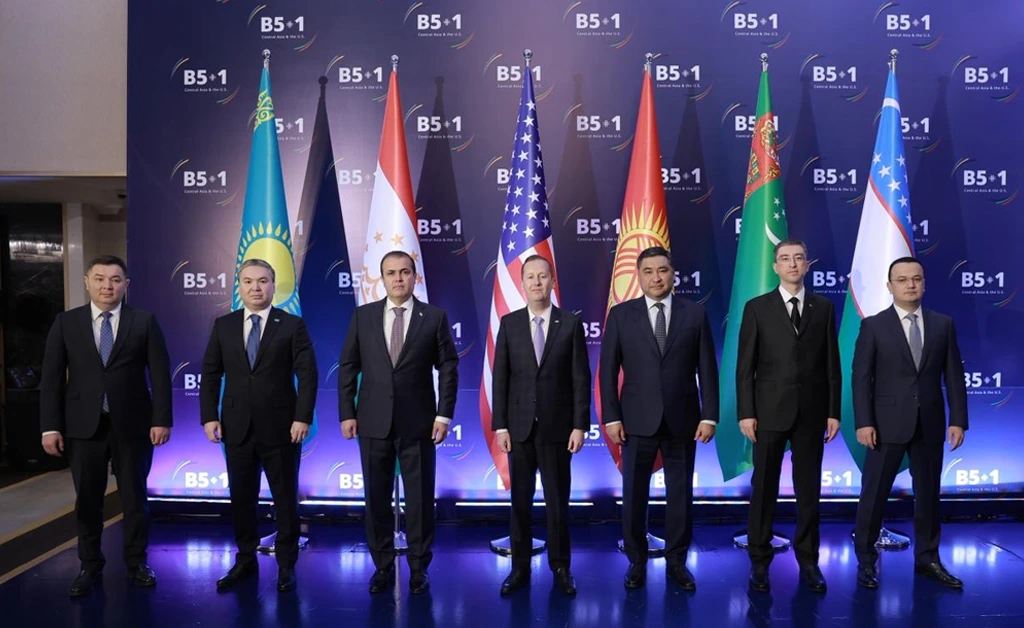
Held in the Kyrgyz capital on February 4 and 5, 2026, the forum drew 421 participants, according to the Center for International Private Enterprise (CIPE), which convened it with support from the US Department of State. Attendees included business leaders, investors, policymakers and experts. Its purpose was not grand declarations but concrete steps. Participants worked to identify reforms that could be delivered in the short and medium term and sustained through continued dialogue between governments and the private sector. The event served as the business counterpart to the C5+1, bringing together Kazakhstan, the Kyrgyz Republic, Tajikistan, Turkmenistan, Uzbekistan and the United States around a shared table.
Which Sectors Did the B5+1 Recommendations Cover?
Building on the inaugural forum held in Almaty in 2024, the Bishkek edition reviewed progress on the original 21 recommendations and set fresh priorities. Task forces presented 26 new recommendations across six priority sectors: agriculture, banking and finance, critical minerals, e-commerce and information technology, transport and logistics, and tourism. The agendas targeted practical goals such as reducing barriers, improving market transparency, harmonizing regulations and enabling cross-border commerce. Each sector received its own public and private dialogue session, where officials responded to the proposals and outlined possible commitments.
Deals on the Table
The forum was not only about policy. More than 40 US companies took part, including major firms in transportation, technology, finance and consumer goods. Together they helped produce tangible commercial outcomes, with more than 15 memoranda of understanding signed between American companies and Central Asian government bodies and enterprises. Those agreements turned the language of reform into working relationships, giving businesses on both sides a foundation to build upon in the months that followed. Because the memoranda were tied to specific sectors and named partners, they carried a credibility that broad political statements often lack.
What Did Washington Signal at the B5+1?
The political weight behind the event was visible in its guest list. The US Special Envoy for South and Central Asia, Ambassador Sergio Gor, highlighted the region’s strategic importance and framed the Bishkek meeting as the first C5 event of 2026. He met Kyrgyz President Sadyr Japarov to discuss economic cooperation and American business engagement, and he tied the forum to the connectivity ambitions of the new transport corridor linking Central Asia through the South Caucasus to global markets.
At the tenth anniversary C5+1 summit, the United States and the five governments recognized the B5+1 as a vital business counterpart to their diplomatic platform. For an organization devoted to American and Turkic commercial ties, that endorsement matters. It confirms that the future of the relationship will be written not only in embassies but in boardrooms, and that private enterprise has moved to the heart of how Washington engages the region. For the companies that attend, the practical value is just as real, since each forum turns broad ambition into named contacts, defined reforms and signed agreements they can act on.
B5+1 Forum 2026 at a Glance
| Item | Detail |
|---|---|
| Dates and place | February 4-5, 2026, Bishkek |
| Convenor | Center for International Private Enterprise (CIPE), with the Kyrgyz government |
| Participants | 421 (plus 1,000+ online viewers) |
| New recommendations | 26 across six sectors |
| US companies | More than 40 |
| MoUs signed | More than 15 |
| Previous forum | Almaty, 2024 (21 recommendations) |
What This Means for Turkish American and Turkic Businesses
For US companies, the B5+1 is the most direct channel to raise regulatory barriers with Central Asian governments, through sector task forces that feed into the C5+1. Firms in logistics, e-commerce, finance, agriculture, tourism and critical minerals can join task forces or submit issues before the next forum.
Central Asian American and Turkish American business associations can partner with B5+1 task forces to represent diaspora-owned firms trading with the region and to connect US companies with local business associations.
Frequently Asked Questions
What is the B5+1?
The B5+1 is a business forum that serves as the private-sector counterpart to the C5+1 diplomatic platform, bringing together Kazakhstan, the Kyrgyz Republic, Tajikistan, Turkmenistan, Uzbekistan and the United States. It is convened by CIPE with US Department of State support.
What came out of the 2026 B5+1 Forum in Bishkek?
Task forces presented 26 new recommendations across six sectors, more than 40 US companies took part, and more than 15 memoranda of understanding were signed between US companies and Central Asian partners.
Where was the first B5+1 Forum held?
The inaugural B5+1 Forum was held in Almaty, Kazakhstan, in March 2024, and produced 21 recommendations that the 2026 Bishkek forum reviewed.
Sources
- Center for International Private Enterprise, B5+1 Forum, 2026. Accessed November 16, 2026.
- The Times of Central Asia, B5+1 Forum Opens as U.S. Companies Expand Economic Footprint in Central Asia, February 4, 2026. Accessed November 16, 2026.
Related Coverage
- Wall Street Comes to the Steppe: US Finance Deepens Its Central Asia Footprint
- John Deere Plants a Flag in Central Asian Agriculture
- Starlink and the Digital Opening of Central Asia
About the American-Turkic Republics Business Alliance (ATBA)
The American-Turkic Republics Business Alliance (ATBA) is a New York-based nonprofit platform that strengthens trade, investment and business collaboration between the United States and the Turkic republics: Türkiye, Azerbaijan, Kazakhstan, Uzbekistan, Kyrgyzstan and Turkmenistan. Companies and professionals can join the network through ATBA membership.
