
Key Takeaways
- The Kazakhstan digital asset fund is planned at $500 million to $1 billion, seeded partly with seized and repatriated assets, National Bank Governor Timur Suleimenov said in November 2025.
- The fund is to invest mainly in ETFs and shares of digital finance companies rather than hold tokens directly.
- In March 2026 the National Bank formed a separate portfolio of up to $350 million from gold and FX reserves for crypto-related assets.
- The US created a Strategic Bitcoin Reserve and Digital Asset Stockpile by executive order on March 6, 2025, using forfeited assets.
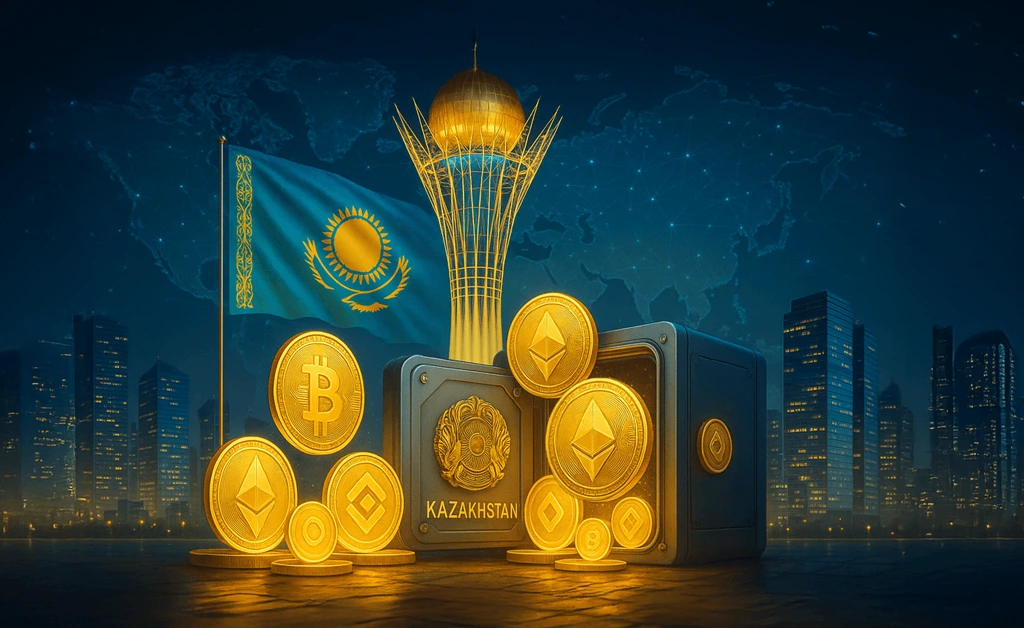
Kazakhstan has long been known to the digital world as a mining powerhouse, home to a large share of the computing power behind the Bitcoin network. Now, through a Kazakhstan digital asset fund, the country wants to be known for something more deliberate. Astana is building a state digital asset fund and a broader framework for regulated crypto finance, a bet that digital money can help move the economy beyond its dependence on oil. The shift is striking for a country once associated mainly with rows of humming mining rigs powered by cheap coal.
In This Article
How Will the Kazakhstan Digital Asset Fund Invest?
The centerpiece of the plan is a state digital asset fund. Rather than piling up Bitcoin directly, officials have chosen a careful path. National Bank Governor Timur Suleimenov told Bloomberg in November 2025 that the fund, worth $500 million to $1 billion, would invest in exchange-traded funds and shares of companies involved with digital currencies and would be very careful about direct exposure to cryptocurrencies.
It is to be seeded partly with assets seized and repatriated from abroad. Separately, in March 2026 the National Bank formed a portfolio of up to $350 million from its gold and foreign exchange reserves for crypto-related assets such as technology company shares and index funds, with investments expected to start in April or May 2026, The Block reported.
What Role Does the AIFC Play in Kazakhstan’s Crypto Strategy?
Much of this activity runs through the Astana International Financial Centre, the country’s fintech hub, which operates under international legal standards. The AIFC is positioning itself as the main home for licensed crypto and fintech activity in Central Asia, which could open doors for American firms that want regulated exposure to the sector. By concentrating oversight in one internationally recognized center, Kazakhstan hopes to reassure cautious investors who have watched other markets struggle with fraud and weak rules.
Kazakhstan’s Digital Asset Plans at a Glance
| Initiative | Detail |
|---|---|
| State digital asset fund | $500 million to $1 billion; seized and repatriated assets; ETFs and company shares |
| National Bank crypto-related portfolio | Up to $350 million from gold and FX reserves; from April-May 2026 |
| Direct token exposure | Limited; officials say no large direct crypto allocation |
| Gold and FX reserves (February 1, 2026) | $69.4 billion |
From Digital Tenge to CryptoCity
The fund is only one part of a wider strategy. Kazakhstan is expanding the digital tenge, its central bank digital currency, which it has used to finance public projects and plans to roll out more broadly across government spending. It is also developing CryptoCity in Alatau, a pilot urban center where residents can test crypto payments for everyday goods and services. The government is weighing licensed crypto banks and a national exchange as well, aiming to bring a large informal market into a regulated framework. The aim is to bring informal crypto activity into a regulated, taxable framework.
How Does Kazakhstan’s Approach Compare With the US?
The timing is deliberate. In the United States, an executive order signed on March 6, 2025, established a Strategic Bitcoin Reserve and a US Digital Asset Stockpile, both initially capitalized with digital assets forfeited in criminal or civil proceedings. Kazakhstan’s approach echoes that model, treating digital assets as a matter of long-term national planning rather than speculation.
For a country whose budget still rises and falls with the price of crude, the appeal is clear. A regulated digital finance sector promises new revenue, new companies and a hedge against commodity cycles. If Astana succeeds, it could turn a reputation built on cheap energy and mining rigs into something more durable, a regional center for the digital economy that speaks the same regulatory language as its American partners.
What This Means for Turkish American and Turkic Businesses
For US asset managers, ETF issuers and digital infrastructure companies, Kazakhstan’s preference for ETFs and listed equities rather than direct tokens points to demand for regulated products. Firms with compliant custody, index and fintech offerings may find partners at the AIFC.
Kazakh American and Turkish American fintech founders can bridge US products and Astana’s regulated market, but should expect strict licensing and AML requirements. This article is for information only and is not financial advice.
Frequently Asked Questions
How big is Kazakhstan’s state crypto fund?
National Bank Governor Timur Suleimenov said in November 2025 that the fund would be worth between $500 million and $1 billion, seeded partly with assets seized and repatriated from abroad.
Will Kazakhstan buy Bitcoin directly?
Officials have signaled limited direct exposure. The state fund is to invest mainly in ETFs and shares of digital finance companies, and the National Bank’s separate $350 million portfolio targets crypto-related company shares and index funds.
Does the US have a strategic Bitcoin reserve?
Yes. An executive order signed on March 6, 2025, established a Strategic Bitcoin Reserve and a US Digital Asset Stockpile, both initially funded with digital assets forfeited in criminal or civil proceedings.
Sources
- Bloomberg Law, Kazakh Crypto-Asset Fund Targets $1 Billion With Seized Wallets, November 7, 2025. Accessed November 16, 2026.
- The Block, Kazakhstan Central Bank to Invest Up to $350 Million in Crypto-Related Assets: Report, March 6, 2026. Accessed November 16, 2026.
- The Block, President Trump Signs Order to Establish Strategic Bitcoin Reserve, March 6, 2025. Accessed November 16, 2026.
Related Coverage
- Air Taxis Over the Steppe: BETA and Joby Bring Advanced Air Mobility to Kazakhstan
- The Tengiz Cash Engine: How Chevron and ExxonMobil Anchor US Investment in Kazakhstan
- New U.S. Tariff Rules Reshape Kazakhstan–America Trade Outlook
About the American-Turkic Republics Business Alliance (ATBA)
The American-Turkic Republics Business Alliance (ATBA) is a New York-based nonprofit platform that strengthens trade, investment and business collaboration between the United States and the Turkic republics: Türkiye, Azerbaijan, Kazakhstan, Uzbekistan, Kyrgyzstan and Turkmenistan. Companies and professionals can join the network through ATBA membership.
