
Key Takeaways
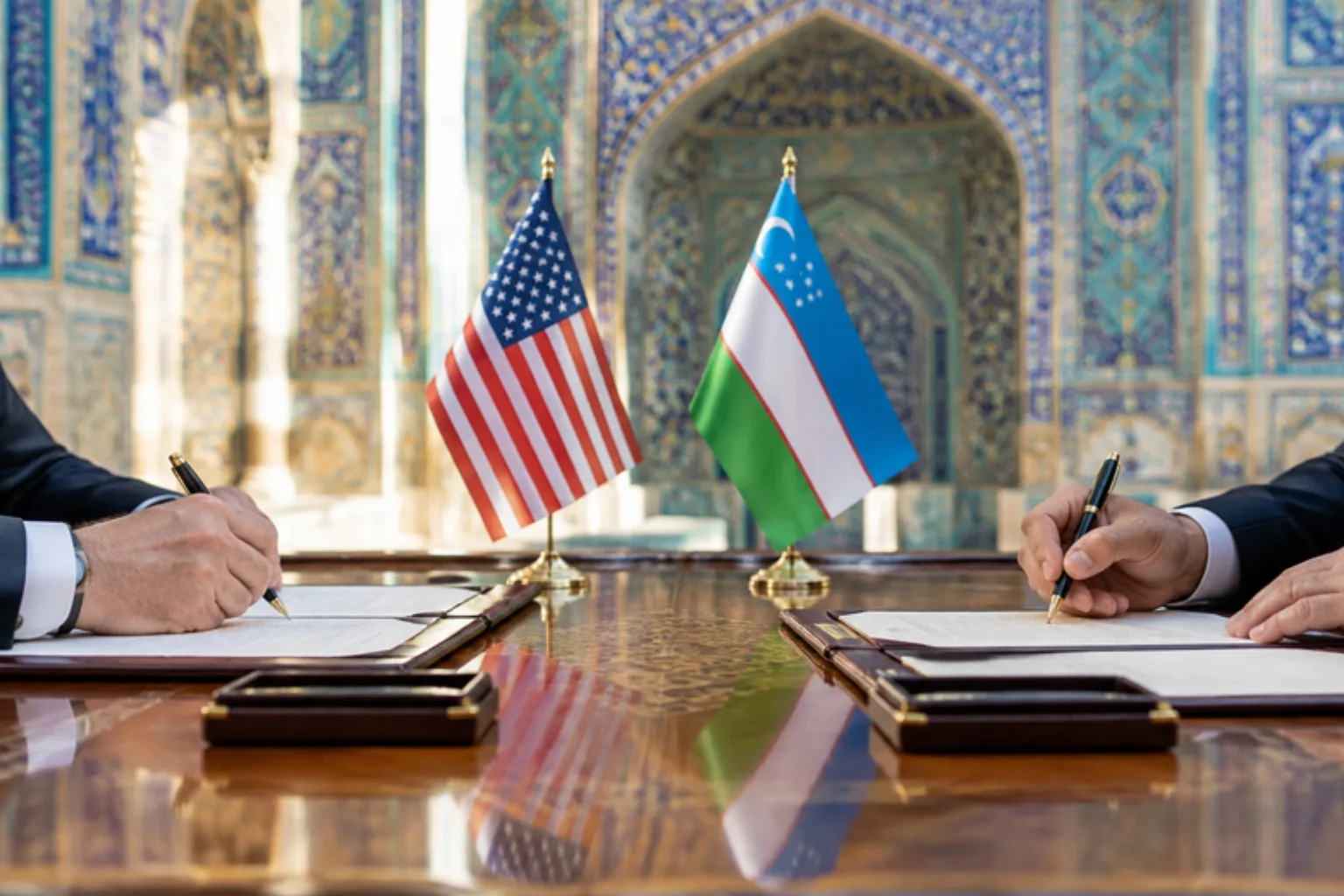
- Uzbekistan and US partners signed 54 agreements on October 19, 2026, during Secretary of State Marco Rubio’s visit to Samarkand, valued at about $12 billion when implemented.
- The package covers transport and energy infrastructure, critical minerals, finance, digital technology, agriculture, healthcare and education.
- Uzbekistan also signed the Artemis Accords, and both governments held the first Enhanced Strategic Partnership Dialogue.
- Rubio said the United States and Central Asia had secured more than $25 billion in commercial arrangements since the November 2025 C5+1 summit.
The latest round of US-Uzbekistan agreements has put a headline figure on Washington’s renewed commercial push into Central Asia. During US Secretary of State Marco Rubio’s visit to Samarkand on 19 October 2026, the United States and Uzbekistan signed or agreed 54 agreements and initiatives worth about $12 billion, according to Uzbekistan’s Ministry of Investment, Industry and Trade.
In This Article
The package spans transport and energy infrastructure, critical minerals, industry, finance, digital technologies, agriculture, healthcare and education. Alongside the commercial deals, Uzbekistan signed the Artemis Accords on civil space cooperation, and the two governments opened a new strategic dialogue.
For businesses following the region, however, the headline number is only the starting point. Most of the documents are agreements, memoranda and planned projects rather than completed investments, and the real test will be how many of them reach financing and construction.
Where Did the $12 Billion US-Uzbekistan Package Come From?
The largest announcements came out of the second meeting of the American-Uzbek Business and Investment Council, held alongside the C5+1 ministerial meeting that brought together the United States and the five Central Asian republics: Kazakhstan, Kyrgyzstan, Tajikistan, Turkmenistan and Uzbekistan.
Rubio arrived in Samarkand with a delegation representing more than 200 American businesses. The council is co-chaired by Saida Mirziyoyeva, head of Uzbekistan’s Presidential Administration, and US Special Envoy Sergio Gor.
The visit builds on the momentum of the November 2025 C5+1 summit at the White House. Rubio said the United States and Central Asian countries had secured more than $25 billion in commercial arrangements since that summit and planned to pursue more than $100 billion in additional trade and investment. For the wider diplomatic context, see our earlier report on Marco Rubio’s visit to Samarkand and what it signals for US–Central Asia trade.
Which Sectors Do the US-Uzbekistan Agreements Cover?
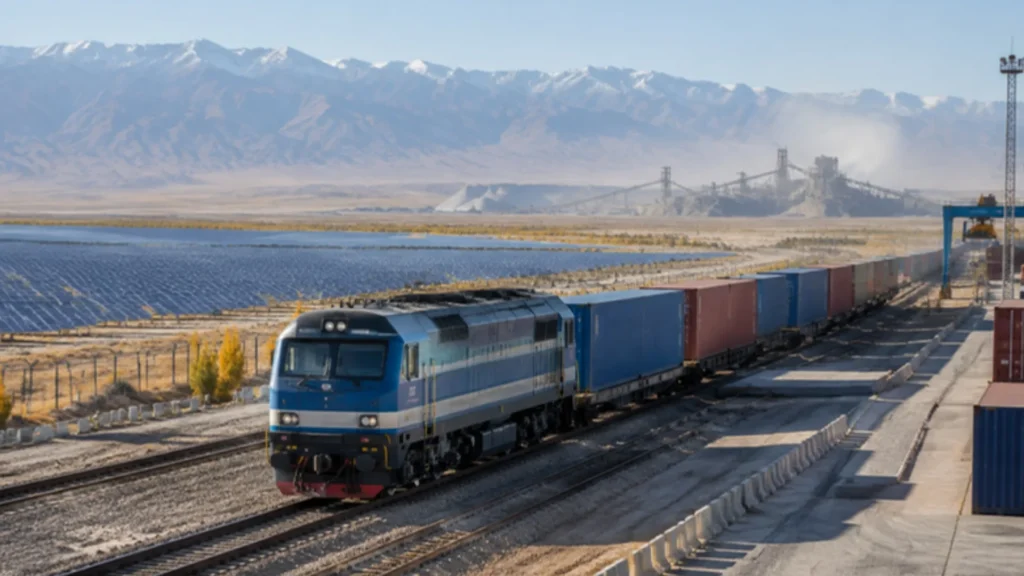
Transport and energy infrastructure. Rail features prominently in the package. Wabtec is expected to support the localisation of railway equipment and components in Uzbekistan, a step that could strengthen domestic manufacturing as well as the country’s role in regional freight.
Critical minerals and industry. Minerals companies ReElement Technologies, Traxys and Trafigura were among the participants named in connection with the agreements. For Washington, the aim is to diversify supply chains for minerals used in energy technologies and advanced manufacturing; for Tashkent, it is to capture more of the processing value at home.
Finance and digital technologies. Major financial institutions including Franklin Templeton, Oppenheimer & Co., Citigroup and BlackRock were cited as involved. Their presence reflects growing interest in Uzbekistan’s capital markets, a theme we explored in our guide to Uzbekistan’s IPO pipeline and $8 billion privatisation programme.
Agriculture, healthcare and education. The agreements also extend beyond heavy industry into agriculture, healthcare and education. Detailed project lists for these sectors have not yet been published.
Artemis Accords and a New Strategic Dialogue
Beyond the commercial agenda, Uzbekistan signed the Artemis Accords, the US-led framework for civil cooperation in space exploration. Rubio and Uzbek Foreign Minister Bakhtiyor Saidov also co-chaired the first session of an Enhanced Strategic Partnership Dialogue.
“This is not the end. This is the beginning,” Rubio said of the new dialogue. According to the State Department, he also welcomed Tashkent’s interest in American civil nuclear technology, an area we examined in Uzbekistan Quietly Sidelines Rosatom — Is There an Opening for American Nuclear Technology?
The relationship has a long history. Washington and Tashkent signed a strategic partnership declaration in March 2002, and a critical minerals memorandum followed in September 2024.
Are the US-Uzbekistan Agreements Binding Investments?
The figures need to be read with care. No full list of the 54 agreements has been published, and it is not yet clear which are binding contracts and which are memoranda of intent. Regional reporting has stressed that the headline numbers represent contracts and planned transactions, not completed investments.
Analyst Abduvali Soyibnazarov, quoted by The Times of Central Asia, argued that success should be judged by how many projects secure financing and move forward, not by how many memoranda are signed.
There are structural questions too. Uzbekistan still lacks permanent normal trade relations with the United States because of the Jackson-Vanik amendment. Rubio has said he supports repealing those restrictions, and bipartisan legislation has been introduced in Congress, although its adoption is still pending.
What This Means for Turkish American and Turkic Businesses
For US exporters and service firms, the Samarkand package is a lead list. Rail, aviation, mining, medical equipment and agricultural technology suppliers should map which named partner or Uzbek ministry is responsible for each project and request introductions before procurement begins.
Turkish American and Uzbek American business owners can play a practical role as partners, distributors and advisers, given their language skills and networks in Tashkent. They should also watch Jackson-Vanik repeal efforts in Congress, since permanent normal trade relations would reduce trade uncertainty for US-Uzbekistan business.
What to Watch
Three indicators will show whether Samarkand marks a turning point: whether the Wabtec localisation and minerals projects move to signed financing; whether the joint investment framework announced in February by the US International Development Finance Corporation (DFC) and the Export-Import Bank, including a proposed holding company for minerals, energy and infrastructure projects, produces transactions; and whether Congress acts on Jackson-Vanik.
For American companies, the Samarkand package signals political will at the highest level. ATBA will keep tracking which of these US-Uzbekistan agreements turn into investments on the ground.
Frequently Asked Questions
How many agreements did the US and Uzbekistan sign in Samarkand?
Uzbekistan’s Ministry of Investment, Industry and Trade reported 54 trade, investment and technology cooperation agreements signed on October 19, 2026, during US Secretary of State Marco Rubio’s visit. The ministry valued the package at about $12 billion when implemented.
What are the Artemis Accords?
The Artemis Accords are a US-led set of principles for civil cooperation in space exploration. Uzbekistan signed them during Rubio’s October 2026 visit to Samarkand, joining other countries that have endorsed the framework, according to The Times of Central Asia.
Does Uzbekistan have permanent normal trade relations with the United States?
No. Uzbekistan is still subject to the Jackson-Vanik amendment, so it does not have permanent normal trade relations. Rubio supports repeal, and bipartisan legislation has been introduced in Congress, but it had not been adopted as of October 2026, Kazinform reported.
Sources
- Ministry of Investment, Industry and Trade of Uzbekistan, Uzbekistan and the United States Sign Agreements Worth $12 Billion, October 19, 2026. Accessed November 16, 2026.
- The Times of Central Asia, Uzbekistan Announces $12 Billion in Agreements During Marco Rubio’s Visit, October 20, 2026. Accessed November 16, 2026.
- Kazinform (state news agency), Rubio’s Samarkand Visit Gives Fresh Momentum to U.S.-Central Asia Ties, October 20, 2026. Accessed November 16, 2026.
Related Coverage
- BlackRock, Citi and GE Aerospace: The US Names Behind Uzbekistan’s $12 Billion Deals
- Uzbekistan’s IPO Pipeline and $8 Billion Privatisation: A Guide for US Investors
- Uzbekistan’s 8.5% Growth Creates New Opportunities for U.S. Trade and Investment
About the American-Turkic Republics Business Alliance (ATBA)
The American-Turkic Republics Business Alliance (ATBA) is a New York-based nonprofit platform that strengthens trade, investment and business collaboration between the United States and the Turkic republics: Türkiye, Azerbaijan, Kazakhstan, Uzbekistan, Kyrgyzstan and Turkmenistan. Companies and professionals can join the network through ATBA membership.
