
Key Takeaways
- Under a June 25, 2026, early harvest trade package, Uzbekistan tariff cuts will eliminate or reduce duties on a broad range of US industrial and agricultural goods.
- The US committed to favorable consideration for Uzbek goods in tariff actions, consistent with US law; it did not promise automatic cuts.
- No product-by-product tariff schedule has been published; the commitments were to be memorialized in the coming weeks.
- US exports to Uzbekistan rose 24.5% to $474.1 million in 2025, according to USTR.
Uzbekistan and the United States have moved to deepen their commercial relationship with a new package of trade commitments that places Uzbekistan tariff cuts, market access and investment at the center of the bilateral economic agenda.
In This Article
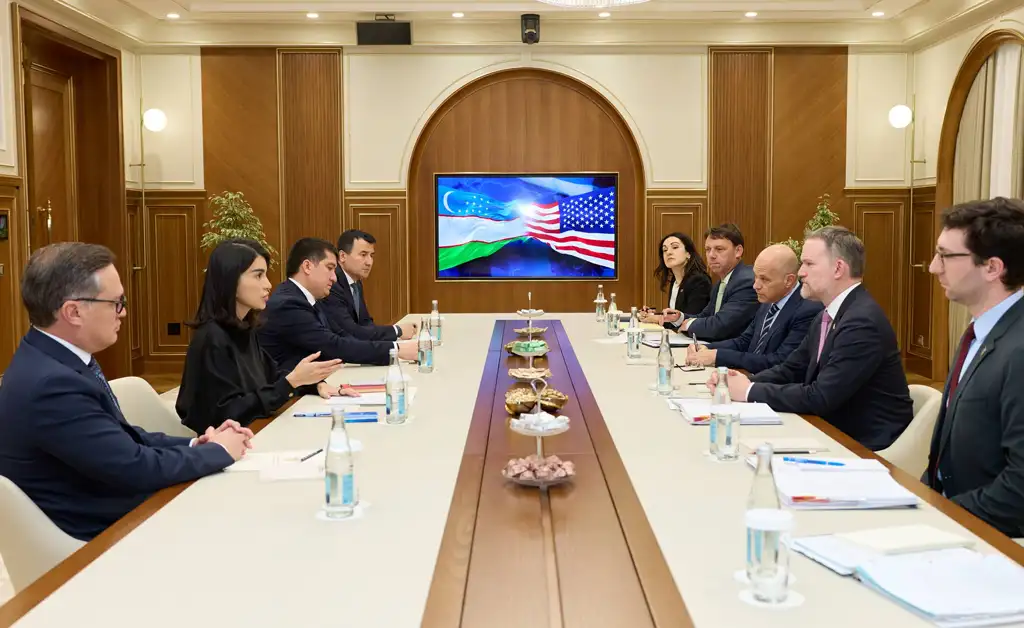
Announced on June 25, 2026, during US Trade Representative Jamieson Greer’s visit to Tashkent, the package includes Uzbekistan’s commitment to eliminate or reduce tariffs on a wide range of U.S. industrial and agricultural goods. The two governments also agreed to accelerate negotiations on an Agreement on Reciprocal Trade and Investment, signaling an effort to build a broader commercial framework rather than relying only on individual transactions.
The development gives U.S. exporters a clearer route into one of Central Asia’s fastest-growing consumer and industrial markets. For Uzbekistan, the measures offer a way to increase access to American technology, machinery, agricultural products and other goods while encouraging additional investment.
Which US Goods Benefit From Uzbekistan Tariff Cuts?
Under the announced “early harvest”, Uzbekistan will eliminate or lower tariffs on a broad group of U.S. industrial and agricultural products. Washington, meanwhile, committed to provide favorable consideration in tariff actions for Uzbek industrial and agricultural goods, to the extent appropriate and consistent with U.S. law, although the announcement does not guarantee automatic reductions for Uzbek exports.
The commitments are expected to be formalized in the coming weeks. Their importance lies partly in the fact that they address a practical barrier to trade: the cost of entering each other’s markets.
U.S. Trade With Uzbekistan Has Passed the $1 Billion Mark
The agreement comes as bilateral goods trade is expanding from a relatively modest base. U.S. goods trade with Uzbekistan totaled an estimated $1.0 billion in 2025, according to USTR. American exports to Uzbekistan rose 24.5% to $474.1 million, while U.S. imports from Uzbekistan reached $574.9 million.
The figures show that the commercial relationship is still developing, but they also provide room for substantial growth. Lower tariffs could make American equipment and products more competitive in Uzbekistan while supporting Uzbek exporters seeking greater access to the U.S. market.
How Are Investment Channels Expanding Alongside Trade?
The tariff package is part of a wider push to build investment links. A U.S.-Uzbekistan Business and Investment Council began work in April, followed in June by the launch of a joint investment platform. Priority areas include energy, infrastructure, critical minerals and manufacturing.
A business forum in Tashkent also drew 193 representatives of U.S. companies, underlining the growing interest of American businesses in Uzbekistan’s expanding economy.
The focus on critical minerals is particularly significant. Uzbekistan is seeking to develop more domestic processing capacity and attract capital and technology into strategic industries. For U.S. companies, that creates potential opportunities beyond conventional exports, including industrial partnerships and supply-chain projects.
Why Does the US-Uzbekistan Trade Framework Matter?
The proposed reciprocal trade and investment agreement could become an important next step if negotiations produce a comprehensive framework. Such an agreement could help establish clearer rules for companies considering longer-term projects, while potentially widening cooperation beyond goods trade.
For Uzbekistan, improved access to American products and capital fits with its broader economic reform program. For the United States, the country represents a growing Central Asian market with demand for industrial equipment, technology, infrastructure services and agricultural products.
The economic relationship is therefore moving toward a more practical phase. Rather than being defined primarily by diplomatic engagement, the latest measures put tariffs, market access, investment and commercial projects at the forefront.
A Broader Commercial Relationship Ahead
The immediate impact will depend on how quickly the tariff commitments are implemented and how negotiations on the reciprocal trade and investment agreement progress. Businesses will also be watching which products receive lower duties and whether the changes translate into increased trade volumes.
Still, the direction is clear. Uzbekistan is opening additional channels for American goods and investment while seeking stronger access to the U.S. market. If the commitments are implemented as announced, the latest package could become an important foundation for a larger U.S.-Uzbekistan trade relationship in Central Asia.
US-Uzbekistan Goods Trade at a Glance (2025)
| Measure | Value |
|---|---|
| Total goods trade | About $1.0 billion |
| US exports to Uzbekistan | $474.1 million (+24.5%) |
| US imports from Uzbekistan | $574.9 million |
| US goods trade balance | Deficit of $100.8 million |
What This Means for Turkish American and Turkic Businesses
US agricultural exporters and makers of machinery, vehicles and industrial equipment should prepare HS-code lists and price models now, so they can act quickly when Uzbekistan publishes the specific tariff lines covered by the early harvest.
Uzbek American and Turkish American distributors can position as import partners for US brands entering Uzbekistan, where lower duties could make US goods more competitive against Chinese, Russian and Turkish suppliers. This article is for information only and is not legal advice.
Frequently Asked Questions
Which US goods will Uzbekistan cut tariffs on?
Uzbekistan committed on June 25, 2026, to eliminate or reduce tariffs on a broad range of US industrial and agricultural goods. The specific product list had not been published at announcement; the two sides said they would memorialize the commitments in the coming weeks.
Will US tariffs on Uzbek goods fall?
Not automatically. The US committed to give favorable consideration to Uzbek industrial and agricultural goods in tariff actions, to the extent appropriate and consistent with US law.
How much does the US export to Uzbekistan?
US goods exports to Uzbekistan were $474.1 million in 2025, up 24.5% from 2024, according to the Office of the US Trade Representative.
Sources
- Office of the US Trade Representative, The United States and Uzbekistan Announce Early Harvest on Trade, Accelerate Agreement on Reciprocal Trade and Investment Talks, June 25, 2026. Accessed November 16, 2026.
- Office of the US Trade Representative, Uzbekistan Trade Summary, n.d.. Accessed November 16, 2026.
Related Coverage
- Kazakhstan and Uzbekistan Invited to the 2026 G20 Summit in Miami: What It Means for Central Asia
- Uzbekistan’s Industrial Output Reaches $53 Billion in the First Half of 2026
- Uzbek Capital Heads to the U.S. as Overseas Investment Rules Open New Opportunities
About the American-Turkic Republics Business Alliance (ATBA)
The American-Turkic Republics Business Alliance (ATBA) is a New York-based nonprofit platform that strengthens trade, investment and business collaboration between the United States and the Turkic republics: Türkiye, Azerbaijan, Kazakhstan, Uzbekistan, Kyrgyzstan and Turkmenistan. Companies and professionals can join the network through ATBA membership.
