
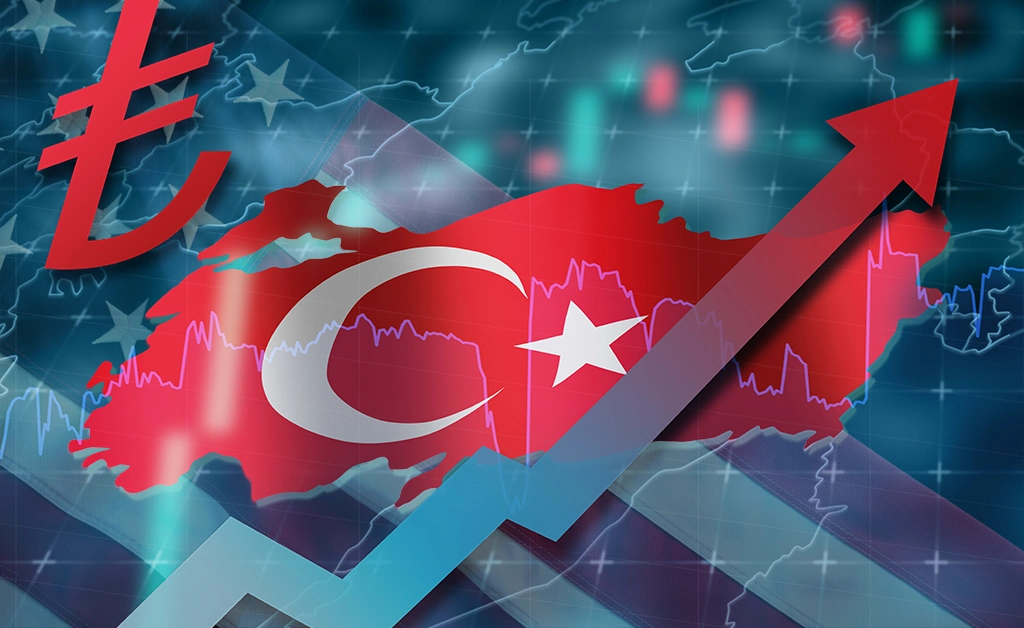
Turkiye and the United States entered 2026 with fresh momentum behind one of the most ambitious goals in their commercial relationship, a bilateral trade volume of $100 billion. Speaking at a roundtable organized by the Union of Chambers and Commodity Exchanges of Turkiye and the US Chamber of Commerce on 21 April 2026, Vice President Cevdet Yılmaz confirmed that trade between the two countries reached $10.4 billion in the first quarter of the year alone, a pace that puts a record year within reach.
A Record First Quarter
The first quarter result signals a clear acceleration. In 2024, total trade between the two allies stood at roughly $33 billion, with Turkish exports near $16.4 billion and imports close to $16.2 billion. The United States remains Turkiye’s second largest export market after Germany, and Turkish firms held a surplus across 65 product categories last year. Reaching $10.4 billion in a single quarter suggests the annual figure could climb well beyond recent norms if the trend continues through the summer and autumn.
The Road to $100 Billion
The $100 billion goal was first set during President Recep Tayyip Erdoğan’s earlier White House visits and has since become the headline metric of the economic relationship. Business leaders point to chemicals, automotive parts, ready to wear fashion, carpets and electronics as sectors where Turkish exporters see strong demand in the American market. Cumulative Turkish investment in the United States has now reached about $13.2 billion, while American investment in Turkiye stands near $15.7 billion, with more than 2,000 US companies already operating in the country. Many exporters argue that a formal free trade framework would move the two economies toward the target far faster than tariff adjustments alone.
Obstacles That Remain
Yılmaz was candid about the challenges. Since 2025 the balance has tilted against Turkiye, driven largely by rising energy and defense imports. Ankara is responding by prioritizing high value sectors and by working to attract balanced foreign direct investment. He welcomed progress on the Halkbank case and called for constructive movement on CAATSA sanctions and defense export controls, both of which continue to shape the ceiling of the relationship. Turkish officials also want American investors to look beyond construction and defense toward digital infrastructure, informatics and research, areas where the value created stays in the domestic economy for longer.
From Ankara to the Turkic Business Community
For the wider American Turkic business community, the trajectory matters well beyond the headline numbers. Yılmaz encouraged Turkish and American contractors to pursue joint ventures in third markets across Africa and Asia, framing the two economies as partners rather than mere buyers and sellers. He positioned Turkiye as a stable anchor and a safe destination for capital amid regional turbulence, pointing to artificial intelligence, cybersecurity and data infrastructure as the next frontier of cooperation. Business groups add that easing tensions could lower Turkiye’s borrowing costs, freeing budget room for further investment. If the first quarter figures prove durable, 2026 could become the year the $100 billion target shifts from aspiration to a credible near term outcome, and a defining chapter in the economic story of the Turkic world and the United States.
