
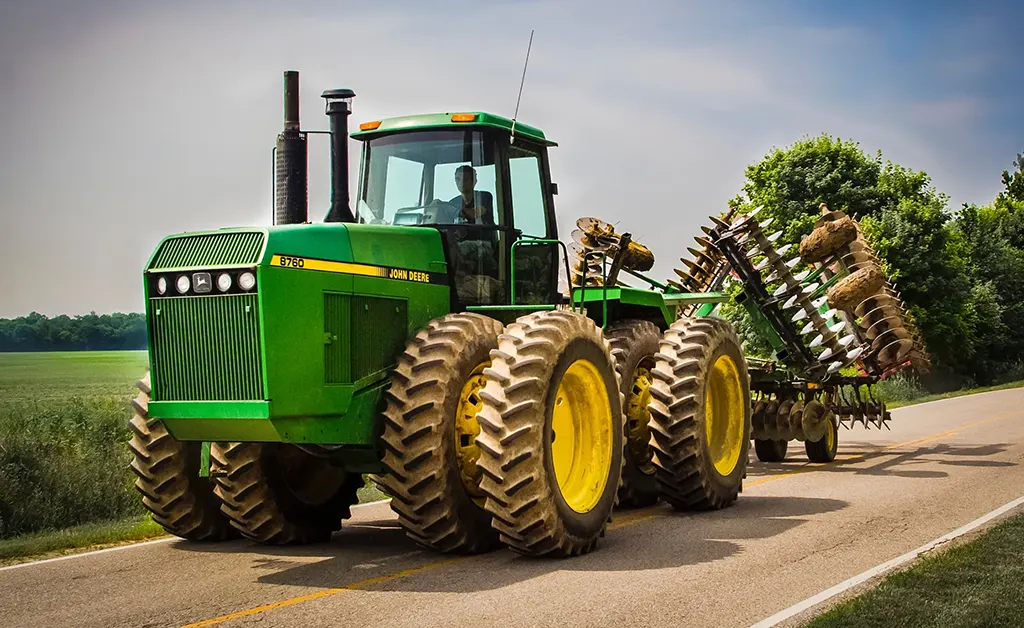
Not every milestone in the growing relationship between the United States and Central Asia involves minerals, gas or aircraft. Some of it grows in the fields. American manufacturer John Deere has emerged as a central player in the region’s agricultural modernization, signing agreements with Kazakhstan and Uzbekistan that together are worth billions of dollars and reach from the steppe to the American Midwest. It is a partnership measured not only in dollars but in tractors, harvesters and the harvests they make possible, and it quietly links farmers in Central Asia to factory workers in the United States.
A Deal Rooted in the Soil
Kazakhstan signed a strategic agreement with John Deere valued at around 2.5 billion dollars to produce up to 3,000 agricultural machines, including tractors and seeders, over five years. Rather than simply importing finished equipment, the deal calls for machines to be assembled at facilities inside Kazakhstan, alongside service centers and training programs. That structure reflects a broader regional priority, capturing more value at home rather than acting only as a buyer of foreign goods, and building industrial capacity that outlasts a single purchase.
Cotton Harvesters Made in Iowa
Uzbekistan struck its own agreement, worth 300 million dollars, for advanced farm machinery. Half of that value was earmarked for cotton harvesting equipment produced at the John Deere factory in Ankeny, Iowa. Cotton is central to the Uzbek economy, and modern harvesters promise higher efficiency and better quality in one of the country’s most important export sectors. The arrangement is a clear example of how a single contract can link a Central Asian field to an American factory floor, supporting skilled jobs in both places at once.
Localizing Production and Skills
The push goes beyond selling machines. Discussions in Kazakhstan have centered on localizing John Deere production, building assembly and service capacity in regions such as Kostanai. In Uzbekistan, the Ministry of Agriculture announced cooperation with the United States Department of Agriculture on joint research and crop science, and held follow up talks with John Deere on precision farming and smart agriculture technologies. These programs aim to raise productivity while training a local workforce able to operate and maintain advanced equipment.
Why Agriculture Matters to the Partnership
Agriculture rarely grabs the same headlines as critical minerals or artificial intelligence, yet it touches far more lives. Both Kazakhstan and Uzbekistan are major farming nations where the sector employs large shares of the population and anchors rural communities. Modern equipment can lift yields, conserve water in a region scarred by the shrinking of the Aral Sea, and strengthen food security.
For the United States, agricultural exports open a durable market for its manufacturers and deepen ties that extend well beyond any single commodity. As John Deere plants its flag across the region, it is helping to build one of the most practical and lasting bridges between American industry and Central Asian development. Officials frame the localized production model as a way to create manufacturing jobs and technical skills that stay in the region long after the machines are delivered. In a relationship often defined by grand strategic themes, it is a reminder that some of the sturdiest bridges are built one field at a time.
