
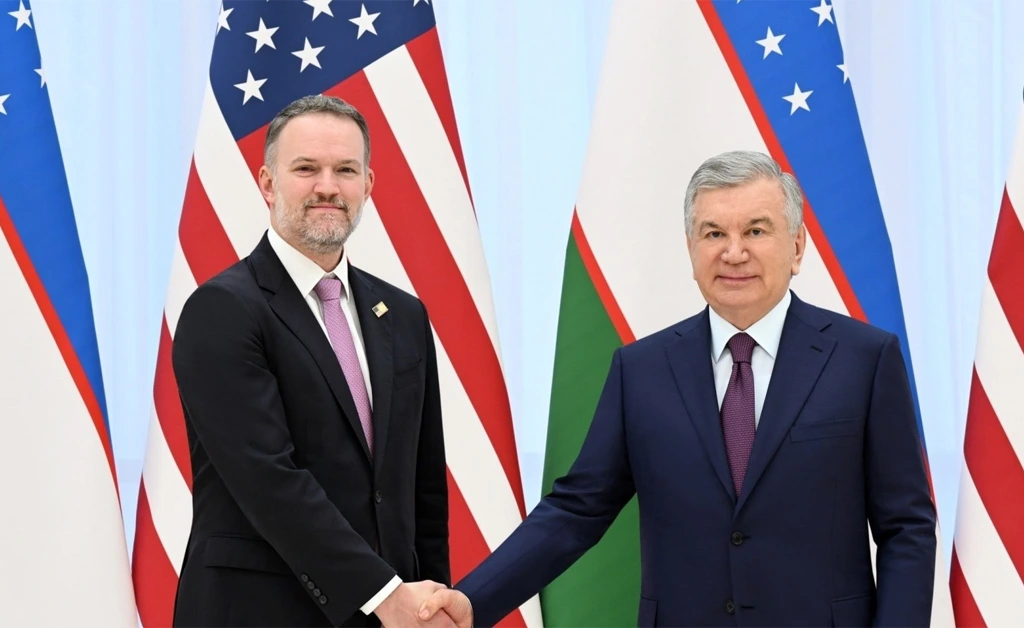
Much of the recent news between the United States and Central Asia has centered on billion dollar projects in energy, minerals and aviation. In June 2026 a quieter kind of breakthrough arrived, one that could prove just as important over time. Uzbekistan agreed to cut tariffs on a broad range of American goods in what both sides called an early harvest, a first installment on the road to a full trade agreement. Tariffs rarely make dramatic headlines, yet they shape the daily cost of doing business more directly than almost any single deal, which is why the opening drew close attention from exporters on both sides.
What the Early Harvest Delivers
Under the arrangement announced by the Office of the US Trade Representative, Uzbekistan committed to eliminate or reduce tariffs on a wide range of American industrial goods and agricultural products. In return, the United States agreed to give favorable consideration in tariff actions to Uzbek industrial and agricultural goods, to the extent appropriate and consistent with American law. The two countries also pledged to strengthen investment cooperation and to explore new pathways for promoting bilateral investment across their economies.
A Visit That Sealed the Terms
The opening followed a visit to Tashkent by the US Trade Representative, who met Uzbek officials to work through the details. Beyond the headline tariff cuts, both governments agreed to deepen cooperation across energy, mining, finance and information technology. They also committed to accelerate negotiations toward a full Agreement on Reciprocal Trade and Investment, and said they would memorialize the early harvest in the following weeks. The pace of the talks signaled a shared desire to move quickly rather than let momentum fade.
Building on a Growing Partnership
The early harvest did not appear from nowhere. It built on the meetings between the two presidents in 2025 that produced some 32 billion dollars in commercial deals, including a major Boeing order worth 8.5 billion dollars alongside investments across critical minerals and other sectors. Trade in goods between the two countries still sits at just over one billion dollars a year, so the potential upside is large. Lower tariffs give American exporters of machinery, vehicles and farm products a clearer path into a young and fast growing market of some 38 million people. Every percentage point shaved from a tariff can decide whether an American product competes on price against rivals from China, Russia or Europe.
The Road to Full Reciprocity
The early harvest settled terms for trade in goods and services, but it did not finish the larger task. A complete reciprocal agreement still requires further negotiation, and Uzbekistan is pursuing the deal in parallel with its long running bid to join the World Trade Organization. Officials have discussed transition periods of several years for sensitive industries, a reminder that liberalization will be gradual rather than sudden.
Even so, the direction is unmistakable. Washington has signaled it will not impose additional tariffs on Uzbek exports while the talks continue, and Tashkent has shown it is willing to open its market to American goods. For businesses on both sides, the early harvest is a practical invitation to start planning, and a sign that the commercial relationship is entering a more mature phase.
