
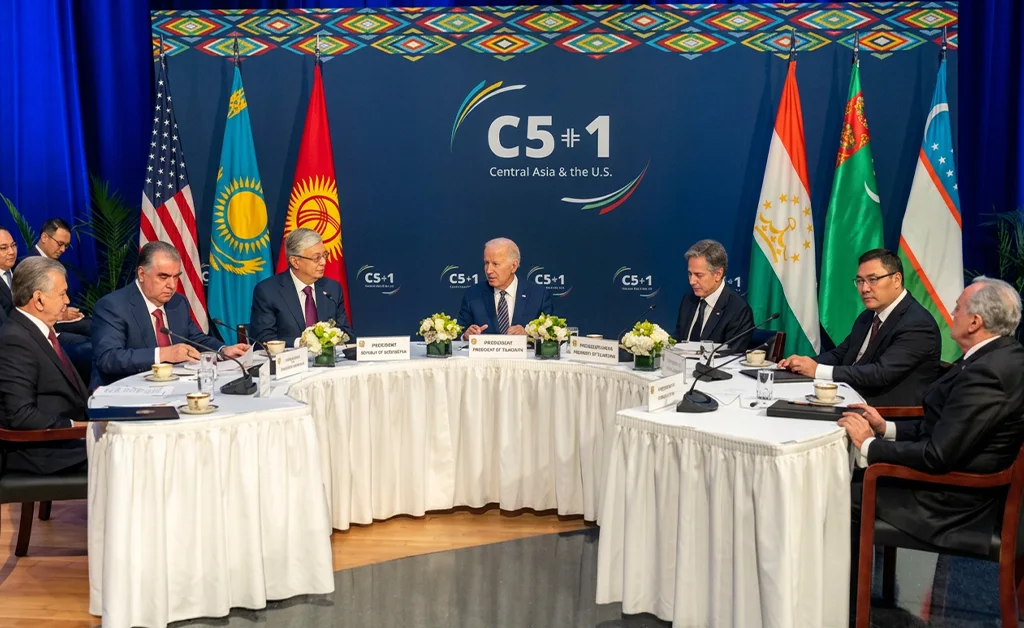
Marking a decade of diplomatic evolution, the C5+1 regional platform has officially entered a transformative new chapter. High-level discussions in the Tajik capital between US Special Representative for South and Central Asia Sergio Gor and Tajik President Emomali Rahmon underscored a profound shift in regional priorities. While traditional energy partnerships and infrastructure projects laid the groundwork for the platform over the past ten years, the milestone anniversary summit spotlighted artificial intelligence, next-generation 5G and 6G mobile networks, cyber security, and smart city development as the driving forces of future growth.
A Decade of Evolution: From Energy to Digital Frontiers
Since its inception, the C5+1 framework—comprising the United States and the five Central Asian republics of Kazakhstan, the Kyrgyz Republic, Tajikistan, Turkmenistan, and Uzbekistan—has served as the premier diplomatic conduit for regional dialogue. However, the Dushanbe meetings signal a maturation of the partnership, moving beyond legacy sectors into high-tech cooperation.
With Central Asian nations rapidly digitising their economies, leaders are eager to leapfrog traditional development phases. The integration of advanced artificial intelligence frameworks and ultra-fast telecommunications infrastructure is now viewed as essential for boosting regional competitiveness, streamlining governance, and fostering innovation-driven economies.
“We are witnessing a fundamental pivot in how Central Asia engages with global technology leaders,” remarked a regional policy observer. “The focus has shifted decisively toward digital sovereignty, secure communications, and harnessing AI to solve complex logistical and urban challenges.”
Securing the Digital Backbone: Cybersecurity and Smart Cities
A core focus of the Dushanbe talks centred on safeguarding critical digital infrastructure. As regional governments roll out smart city initiatives—optimising everything from urban traffic grids to public utilities—the demand for robust cybersecurity measures has never been more critical.
American technology firms and institutions are expected to play a pivotal role in providing technical expertise, training local talent, and deploying secure network architectures. By establishing resilient 5G frameworks and preparing the ground for future 6G standards, the collaboration aims to protect regional networks from evolving cyber threats while ensuring seamless cross-border data flows.
Furthermore, these digital initiatives are designed to bridge geographic isolation, connecting landlocked Central Asian markets directly to global digital hubs. This technological connectivity is expected to unlock new avenues for entrepreneurial growth, attracting venture capital and tech startups to the region.
Charting the Next Decade
As the C5+1 platform looks toward its next ten years, the Dushanbe Summit has successfully set a forward-looking agenda. By aligning American technological prowess with Central Asia’s dynamic digital ambitions, the partnership is creating a modern economic blueprint.
With implementation timelines already under discussion, upcoming regional forums will likely focus on regulatory harmonization, joint research and development ventures, and targeted investments in digital education, ensuring that the next era of cooperation delivers tangible benefits across the entire region.
