
Key Takeaways
- US Special Envoy Sergio Gor and Tajik President Emomali Rahmon met in Dushanbe on April 28, 2026, and named AI and digital infrastructure as promising areas for cooperation.
- A C5+1 Statement of Intent dated November 8, 2025, commits the six governments to trusted ICT, including 5G, 6G, undersea cables, data centers and satellite communications.
- The statement also covers AI research and education, cybersecurity for critical infrastructure and smart cities.
- Tajikistan seeks US investment in hydropower, mining, mineral processing, light industry, food, chemicals and pharmaceuticals.
Artificial intelligence and digital infrastructure have moved onto the US-Central Asia agenda. When US Special Envoy for South and Central Asia Sergio Gor met Tajik President Emomali Rahmon in Dushanbe on April 28, 2026, the two sides named artificial intelligence, digital infrastructure and economic digitalization as promising areas for cooperation, The Times of Central Asia reported.
In This Article
The meeting also covered trade and investment under the US-Tajikistan Trade and Investment Framework Agreement (TIFA), security cooperation and progress under the C5+1 format. Rahmon noted that the United States is among Tajikistan’s top five investment partners.
What Did the C5+1 Agree on AI, 5G and 6G?
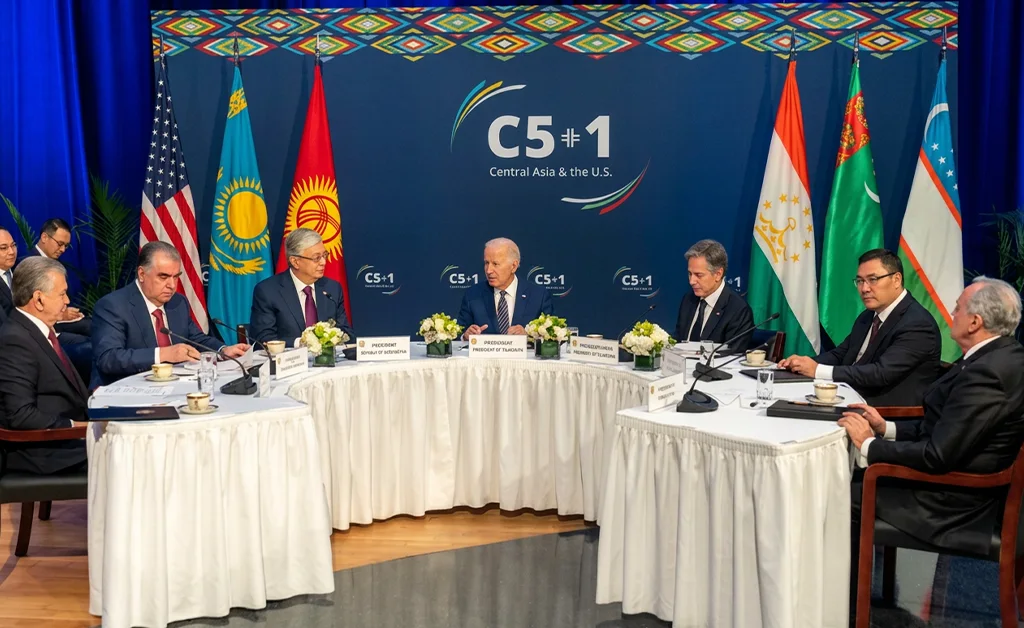
The digital focus builds on commitments made for the C5+1’s tenth anniversary. In a Statement of Intent on Economic Cooperation dated November 8, 2025, the governments of Kazakhstan, the Kyrgyz Republic, Tajikistan, Turkmenistan, Uzbekistan and the United States agreed to adopt trusted information and communications technology, including fiber-optic networks, 5G, 6G, undersea cables, data center equipment and satellite communications, according to the text published by Kazakhstan’s Foreign Ministry.
The same statement commits the six governments to integrate AI into C5+1 working groups, expand AI research and education, cooperate on cybersecurity for critical infrastructure and promote smart city development.
C5+1 Digital Commitments at a Glance
| Area | Commitment (November 8, 2025) |
|---|---|
| Telecom and ICT | Trusted fiber-optic, 5G, 6G, undersea cables, data center equipment, satellite communications |
| Artificial intelligence | Integrate AI into C5+1 working groups; AI research, education and AI centers |
| Cybersecurity | Protect critical infrastructure, share threat information, train specialists |
| Smart cities | Promote smart city development and digital transformation |
| Data flows | Seek alignment with standards such as the Global Cross-Border Privacy Rules Forum |
Which Sectors Does Tajikistan Want US Investment In?
Beyond digital cooperation, Tajikistan wants more US involvement in hydropower, mining and mineral processing, light industry, food production, chemicals and pharmaceuticals. The sides also discussed joint ventures to process agricultural products for export.
What This Means for Turkish American and Turkic Businesses
US telecom equipment makers, cloud and data center operators, and cybersecurity firms have a formal policy opening across all five Central Asian states, since the C5+1 governments committed to trusted ICT suppliers. Firms should track national tenders and DFC or EXIM financing for digital projects.
Central Asian American and Turkish American tech entrepreneurs can help US firms localize products and find partners, and can tap demand for AI training and education programs named in the C5+1 commitments.
What Comes Next for the C5+1?
The C5+1 is now a ten-year-old format bringing together the United States and the five Central Asian states. The practical test is whether its digital commitments turn into procurement, financing and partnerships, especially for trusted network equipment, data centers and cybersecurity services.
Frequently Asked Questions
What did Sergio Gor and Emomali Rahmon discuss in Dushanbe?
At their April 28, 2026, meeting, they discussed trade and investment under the US-Tajikistan TIFA, security cooperation, the C5+1 format, and artificial intelligence, digital infrastructure and economic digitalization as areas for cooperation.
What did the C5+1 agree on 5G and 6G?
In a November 8, 2025, Statement of Intent, the C5+1 governments agreed to adopt trusted ICT infrastructure, including fiber-optic networks, 5G, 6G, undersea cables, data center equipment and satellite communications.
Which countries are in the C5+1?
The C5+1 brings together the United States and the five Central Asian states: Kazakhstan, the Kyrgyz Republic, Tajikistan, Turkmenistan and Uzbekistan. The format marked its tenth anniversary in 2025.
Sources
- The Times of Central Asia, U.S. Envoy Gor Meets Rahmon in Tajikistan for Trade, Security Talks, April 28, 2026. Accessed November 16, 2026.
- Ministry of Foreign Affairs of Kazakhstan, Statement of Intent Between the C5+1 Governments on Economic Cooperation, November 8, 2025. Accessed November 16, 2026.
Related Coverage
- Bishkek Hosts the B5+1: How Business Became the Engine of US Central Asia Relations
- Wall Street Comes to the Steppe: US Finance Deepens Its Central Asia Footprint
- John Deere Plants a Flag in Central Asian Agriculture
About the American-Turkic Republics Business Alliance (ATBA)
The American-Turkic Republics Business Alliance (ATBA) is a New York-based nonprofit platform that strengthens trade, investment and business collaboration between the United States and the Turkic republics: Türkiye, Azerbaijan, Kazakhstan, Uzbekistan, Kyrgyzstan and Turkmenistan. Companies and professionals can join the network through ATBA membership.
