
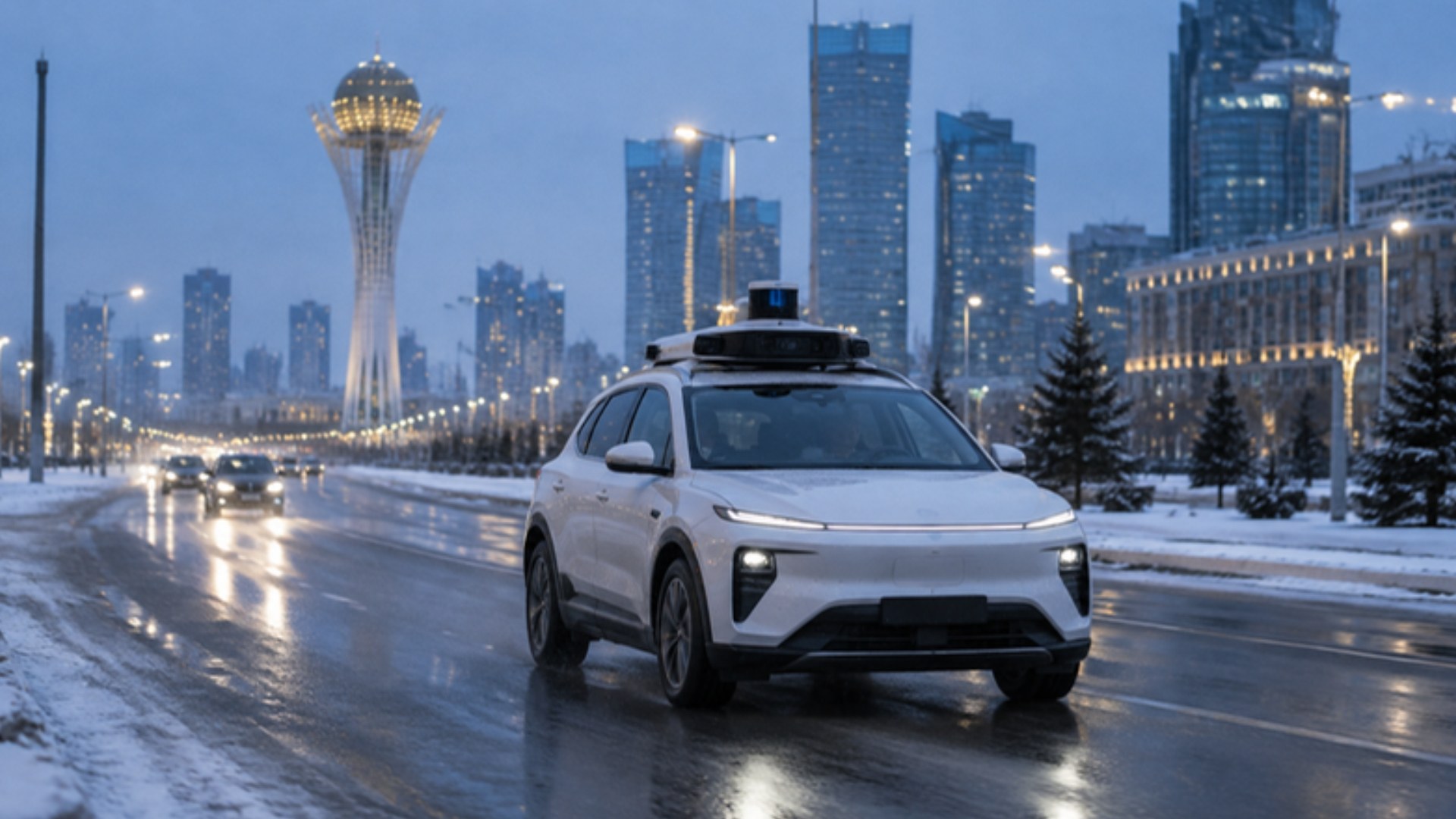
Key Takeaways
- inDrive, NVIDIA and Pony.ai signed a non-binding memorandum on October 23, 2026, to explore robotaxi services in Kazakhstan, with Astana as the first test city.
- Pony.ai would supply Gen-7 robotaxis, inDrive would run the service on its app, and NVIDIA would provide AI infrastructure including Hyperion and Halos.
- Testing is planned for the first half of 2027 with a safety operator on board, inDrive’s chief technology officer told TechCrunch.
- A launch in Astana depends on an agreement with the government of Kazakhstan.
Driverless cars are heading for the Kazakh steppe. California-based ride-hailing platform inDrive has signed a memorandum of understanding with NVIDIA and Pony.ai to explore robotaxi services in Kazakhstan, with Astana named as the first test market. If the plan goes ahead, the Kazakh capital could become one of the first cities in Central Asia to see Level 4 autonomous vehicles carrying paying passengers.
In This Article
The three companies announced the non-binding agreement on 23 October 2026. It sets out a joint effort to assess the technical, operational, regulatory and commercial case for running autonomous ride-hailing on the inDrive app, starting in Astana and potentially extending to other Kazakh cities and other inDrive markets later on.
Who Does What in the Astana Robotaxi Project?
The partnership splits the work along clear lines, with each company bringing a different piece of the autonomous mobility puzzle:
- Pony.ai supplies its seventh-generation (Gen-7) robotaxis and its Level 4 autonomous driving technology.
- inDrive runs the service through its ride-hailing app and manages day-to-day operations.
- NVIDIA provides the AI infrastructure, including the NVIDIA Hyperion platform and the Halos safety system.
According to TechCrunch, testing is pencilled in for the first half of 2027 and will begin with a safety operator on board. The launch itself would follow a formal agreement with the government of Kazakhstan.
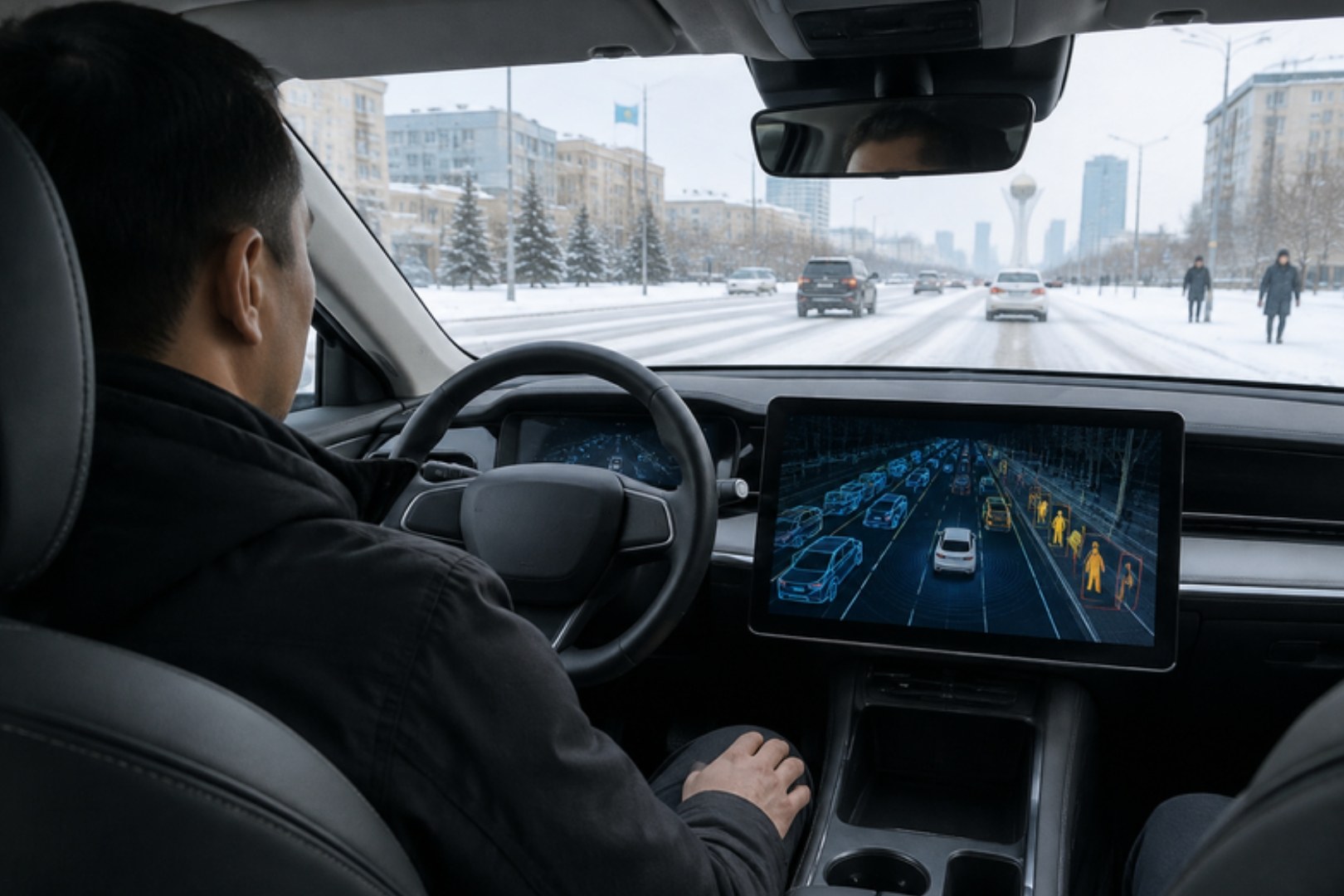
Why Astana for Robotaxi Tests?
Kazakhstan has recently put in place its first structured legal framework for driverless transport, as part of the government’s push under its “Year of Digitalisation and Artificial Intelligence”. That regulatory groundwork is a key reason the partners chose the country as their first test market.
The weather is the other reason. Astana is famous for its long, harsh winters, with heavy snow, ice and temperatures that regularly fall well below freezing. For a technology that has largely been proven in milder climates, the city offers a demanding real-world test.
“Astana is also the second-coldest capital in the world, with long winters, snow and ice.”
Arsen Tomsky, Founder and CEO, inDrive
For inDrive, Kazakhstan is familiar ground. The company operates in more than 1,200 cities across 47 countries, its app has been downloaded over 400 million times, and it is one of the best-known ride-hailing brands in Central Asia. Testing robotaxis in a market where it already has strong brand recognition gives the project a solid commercial base.
Who Are inDrive, Pony.ai and NVIDIA?
Pony.ai, listed on Nasdaq and founded in 2016, already runs fully driverless commercial services with its Gen-7 vehicles in several Chinese cities and has deployments in Europe, the Middle East and Southeast Asia. Kazakhstan would be its first market in Central Asia. Pony.ai founder and CEO James Peng described the country as “an exciting opportunity to bring autonomous mobility to a new market in Central Asia.”
NVIDIA’s role underlines how central US technology has become to autonomous driving worldwide. Rishi Dhall, NVIDIA’s Vice President of Automotive, said the Hyperion platform and the Halos safety system give inDrive and Pony.ai a route to “scalable robotaxi services in Kazakhstan”.
What Does the Robotaxi Plan Mean for US-Kazakhstan Tech Ties?
The robotaxi plan is the latest sign that Kazakhstan wants to be a regional testbed for advanced technology, and that American companies see it as a serious partner. It follows news that US-based FireBird AI plans to build a data centre in Kazakhstan, and comes amid a wider wave of US engagement across Central Asia after the C5+1 meeting in Samarkand.
Much still needs to happen before the first passenger books a driverless ride in Astana. The memorandum is non-binding, a government agreement has yet to be signed, and the vehicles will need to prove they can cope with a Kazakh winter. But the direction of travel is clear: autonomous vehicles, AI infrastructure and US–Kazakhstan technology investment are moving up the agenda.
ATBA will follow the project closely as it moves from paper to pavement. Would you ride in a driverless taxi through Astana in January? We suspect plenty of commuters will be curious to find out.
Sources: Business Wire, TechCrunch, CnEVPost (23 October 2026). Images are AI-generated illustrations.
What This Means for Turkish American and Turkic Businesses
For US technology suppliers, the Astana project creates demand for mapping, sensor calibration, cold-weather testing, insurance and safety validation services. Companies with winter-driving data or road infrastructure expertise should approach inDrive and NVIDIA’s automotive team while the pilot is being designed.
Turkic diaspora entrepreneurs in mobility, fleet management and software can follow the project as a template for other Central Asian cities. Because the memorandum is non-binding, the key milestones to watch are the government agreement and the first safety-operator test permits in 2027.
Frequently Asked Questions
When will robotaxi tests start in Astana?
inDrive’s chief technology officer, Yuri Misnik, told TechCrunch that testing should begin in Astana in the first half of 2027. The first tests will include a safety operator, with fully driverless rides as the long-term goal. A launch also requires an agreement with Kazakhstan’s government.
Is Pony.ai an American company?
No. Pony.ai is a Chinese autonomous driving company listed on Nasdaq, as TechCrunch describes it. The US participants in the Astana project are NVIDIA, which supplies the AI platform, and inDrive, a ride-hailing company headquartered in Mountain View, California.
Has Kazakhstan approved robotaxis?
Kazakhstan has introduced rules for testing autonomous vehicles on certain public roads and announced plans in September 2026 to launch autonomous taxi services in 2027, according to TechCrunch. The inDrive project still needs a specific agreement with the government before it can launch in Astana.
Sources
- TechCrunch, Uber Rival inDrive Eyes 2027 Robotaxi Tests in Central Asia with Pony AI and Nvidia, October 22, 2026. Accessed November 16, 2026.
- Trend News Agency, inDrive, Pony.ai and NVIDIA Explore Robotaxi Launch in Kazakhstan’s Astana, October 29, 2026. Accessed November 16, 2026.
Related Coverage
- Kazakhstan Courts Texas: New Push for Trade and Investment Ties
- US-Based FireBird AI to Build a Data Center in Kazakhstan
- Reading the State Department’s 2026 Kazakhstan Investment Climate Statement: $35.5 Billion In, and the Four Risks Washington Flags
About the American-Turkic Republics Business Alliance (ATBA)
The American-Turkic Republics Business Alliance (ATBA) is a New York-based nonprofit platform that strengthens trade, investment and business collaboration between the United States and the Turkic republics: Türkiye, Azerbaijan, Kazakhstan, Uzbekistan, Kyrgyzstan and Turkmenistan. Companies and professionals can join the network through ATBA membership.
