
Key Takeaways
- US Secretary of State Marco Rubio and the foreign ministers of Kazakhstan, Kyrgyzstan, Tajikistan, Turkmenistan and Uzbekistan adopted the joint statement “C5+1: Historic Partnership, Prosperous Future” in Samarkand on October 19, 2026.
- The statement commits the sides to new transport links, including the Trans-Caspian Trade Route (Middle Corridor), and to infrastructure investment.
- On critical minerals, it backs expanded extraction and processing, more value-added exports and exchanges on geological data management.
- It contains no specific funding figures or implementation timelines.
The Middle Corridor has moved to the centre of US–Central Asia economic policy. At the C5+1 ministerial meeting in Samarkand on 19 October 2026, US Secretary of State Marco Rubio and the foreign ministers of Kazakhstan, Kyrgyzstan, Tajikistan, Turkmenistan and Uzbekistan adopted a joint statement focused on trade, connectivity and critical minerals.
In This Article
The statement describes the six countries as “enduring partners of choice” and sets out a shared aim: a Central Asia that “returns to the center of the global economy”.
Its key commitments cover investment in the Trans-Caspian trade route, expanded mineral processing and industrial cooperation, simpler customs procedures and a larger role for business through the B5+1 platform.
How Will the C5+1 Support the Middle Corridor?
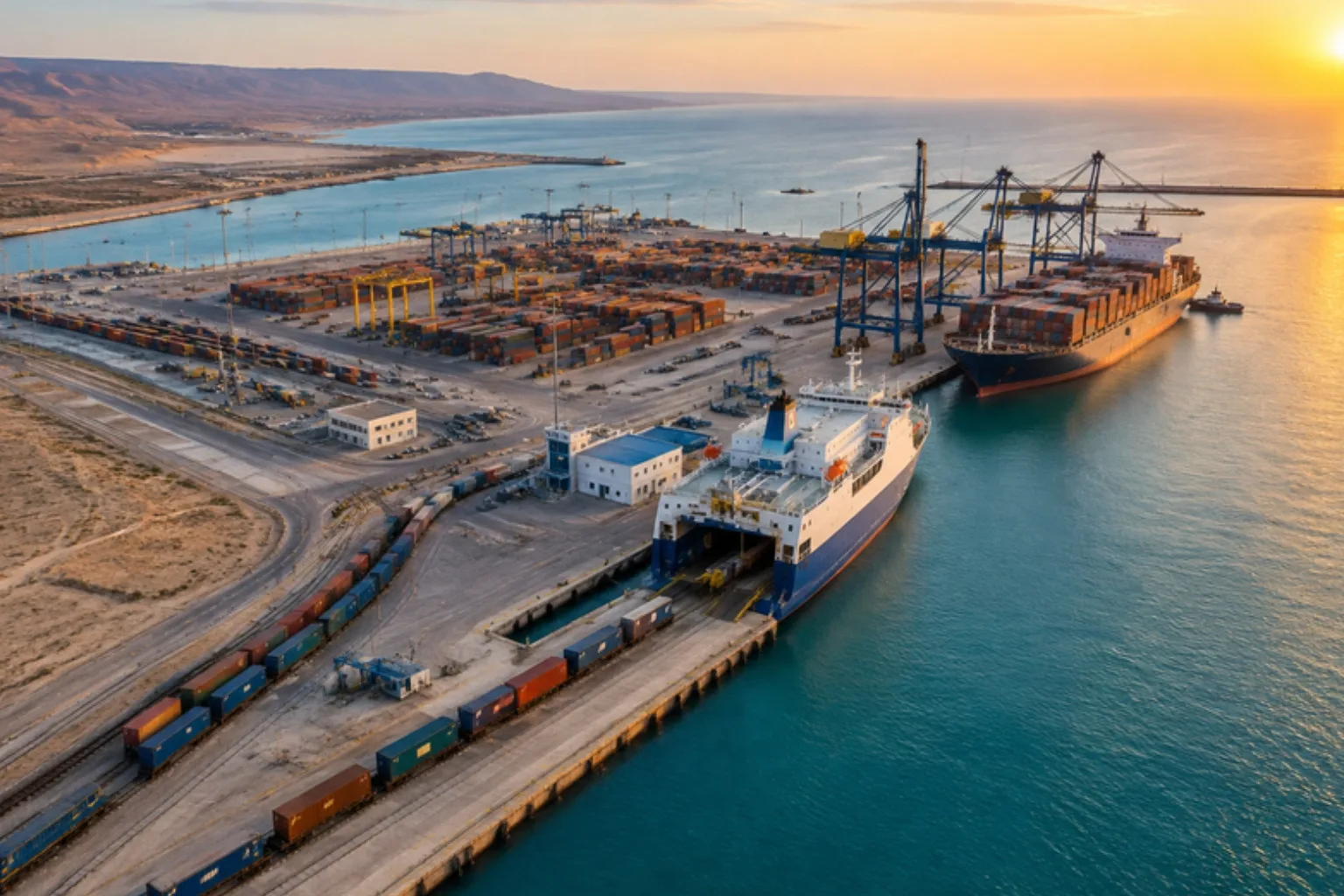
The Trans-Caspian trade route, widely known as the Middle Corridor, links Central Asia with European markets via the Caspian Sea, the South Caucasus and Türkiye, bypassing Russia. In the joint statement, the sides committed to building new, modern transport links, including along the route, and to investing in the infrastructure that supports them.
Rubio said the United States would help improve the route’s infrastructure and “give our partners more ways to reach American and Central Asian markets”. No figures were given for new infrastructure funding.
For context on the investment needs along the route, see our analysis of the World Bank’s $55 billion Trans-Caspian blueprint and the Middle Corridor’s backhaul gap.
What Did the C5+1 Agree on Critical Minerals?
Critical minerals were the second pillar of the talks. Washington is seeking to diversify its supplies of minerals used in energy technologies and advanced manufacturing, and Central Asia holds some of the most significant reserves outside China.
The joint statement commits the sides to expanding mineral extraction and processing, producing more value-added products for export, and exchanging expertise on the management of geological data. Uzbek Foreign Minister Bakhtiyor Saidov proposed cooperation covering exploration, processing and the development of local industrial clusters.
The emphasis on processing matters. Exporting raw ore brings limited benefit to host economies; building refining and manufacturing capacity in the region creates jobs and gives US partners a more resilient supply chain. Recent transactions such as the $1.1 billion tungsten deal in Kazakhstan show how this model can work in practice.
Simpler Customs and Regional Integration
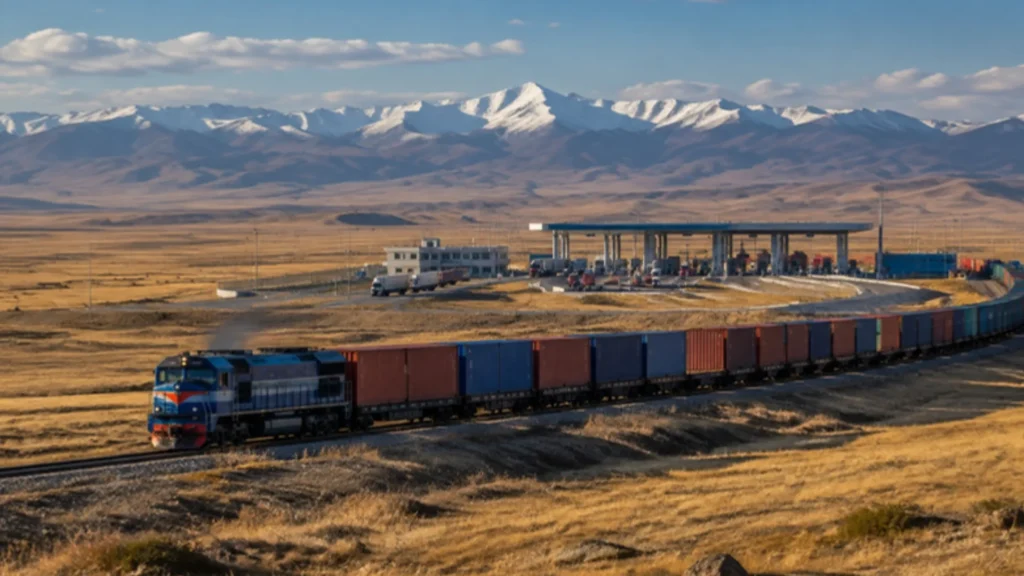
The ministers also backed deeper regional integration through more intraregional trade, better transport connectivity, harmonised customs procedures and stronger industrial cooperation, with the goal of creating a regional market linked to the United States.
For logistics operators and exporters, customs is often where corridors succeed or fail. Faster and more predictable border crossings reduce transit times and costs, and make multimodal routes across the Caspian more competitive with established alternatives.
The statement further commits the sides to expanding digital connections, people-to-people ties and English-language training, and to promoting e-commerce, innovation and entrepreneurship using secure and trusted technology.
What Is the B5+1 Business Platform?
Business is expected to play a larger role in turning commitments into projects. The joint statement aims to create commercial opportunities for American companies in Central Asia and to expand Central Asian companies’ access to investment and operations in the US market.
Saidov called for closer links between the C5+1 diplomatic format and the B5+1 business platform, so that companies can help identify the projects worth pursuing. The same visit produced 54 agreements and initiatives worth about $12 billion between the United States and Uzbekistan alone, as we reported in US and Uzbekistan Sign 54 Agreements Worth About $12 Billion in Samarkand.
Energy, Security and Cultural Cooperation
Beyond trade, the statement covers energy cooperation aimed at integrated, high-value supply chains and energy resilience; security cooperation on counterterrorism, organised crime, border security and cybersecurity; nuclear security and peaceful nuclear energy, building on the Central Asian Nuclear-Weapon-Free Zone; and the protection of cultural heritage.
All five Central Asian states maintain extensive economic ties with Russia and China. Rubio said Washington is seeking competition rather than exclusivity: “This is not about coming here to say, stop talking to somebody else or stop working with some other country.”
What This Means for Turkish American and Turkic Businesses
For US exporters and investors, the joint statement is a policy signal rather than a funding package. Logistics, rail, port, customs technology and mineral processing companies should treat it as confirmation that Washington will back Middle Corridor and critical minerals projects, and should look for financing through EXIM, DFC and the B5+1 business platform.
Turkic diaspora businesses in the United States can position themselves as partners in the regional market the statement describes, especially in trade facilitation, e-commerce and English-language training. Watch for project announcements at upcoming B5+1 events and for any financing tied to the Trans-Caspian route.
What to Watch
The joint statement sets a clear direction, but it does not include specific financial commitments or implementation timelines. The key indicators will be whether financing follows for Trans-Caspian infrastructure, whether customs harmonisation produces measurable reductions in transit times, and whether the B5+1 platform generates a pipeline of bankable projects.
Near-term milestones include political consultations between the United States and Turkmenistan in Ashgabat in November and the G20 summit in Miami in December. For US companies, the Middle Corridor and critical minerals are now firmly on the C5+1 agenda; ATBA will continue to track how these commitments translate into trade on the ground.
Frequently Asked Questions
What is the C5+1?
The C5+1 is a diplomatic format that brings together the United States and the five Central Asian states: Kazakhstan, Kyrgyzstan, Tajikistan, Turkmenistan and Uzbekistan. Its first ministerial meeting was held in Samarkand in 2015, and the October 2026 ministerial returned to the same city.
What did the C5+1 joint statement say about the Middle Corridor?
The October 19, 2026, joint statement commits the six countries to building new and modern transport links, including along the Trans-Caspian Trade Route, and to investing in supporting infrastructure. It also backs harmonized customs procedures and a competitive regional market linked to the United States.
Did the C5+1 announce new funding for Central Asia?
No specific funding was announced in the joint statement. It sets shared priorities in trade, connectivity, critical minerals, energy and security. Separate commercial deals were announced during the visit, including 54 US-Uzbekistan agreements valued at about $12 billion when implemented.
Sources
- Ministry of Foreign Affairs of Uzbekistan, C5+1: Historic Partnership, Prosperous Future (joint statement), October 19, 2026. Accessed November 16, 2026.
- Kazinform (state news agency), Rubio’s Samarkand Visit Gives Fresh Momentum to U.S.-Central Asia Ties, October 20, 2026. Accessed November 16, 2026.
Related Coverage
- Turkmenistan and AECOM Talk Modernising the Trans-Caspian Route
- The Small-Market Opening: Kyrgyzstan’s EXIM-Backed Wabtec Order and Turkmenistan’s Investment Slowdown
- Azerbaijan as a Regional Base: The $201 Million Trans-Caspian Fund and What the USACC Playbook Signals
About the American-Turkic Republics Business Alliance (ATBA)
The American-Turkic Republics Business Alliance (ATBA) is a New York-based nonprofit platform that strengthens trade, investment and business collaboration between the United States and the Turkic republics: Türkiye, Azerbaijan, Kazakhstan, Uzbekistan, Kyrgyzstan and Turkmenistan. Companies and professionals can join the network through ATBA membership.
