
Key Takeaways
- On June 25, 2026, the US and Uzbekistan announced an early harvest of trade commitments during US Trade Representative Jamieson Greer’s visit to Tashkent, and agreed to speed up reciprocal trade agreement talks.
- Uzbekistan committed to eliminate or reduce tariffs on a broad range of US industrial and agricultural goods; the US committed to favorable consideration for Uzbek goods in tariff actions, consistent with US law.
- Both sides agreed to accelerate talks on an Agreement on Reciprocal Trade and Investment and to memorialize the early harvest in the coming weeks.
- US goods trade with Uzbekistan totaled about $1.0 billion in 2025, according to USTR.
The United States and Uzbekistan are accelerating work toward a broader reciprocal trade and investment framework as both sides seek to turn rapidly developing commercial ties into a more structured economic relationship.
In This Article
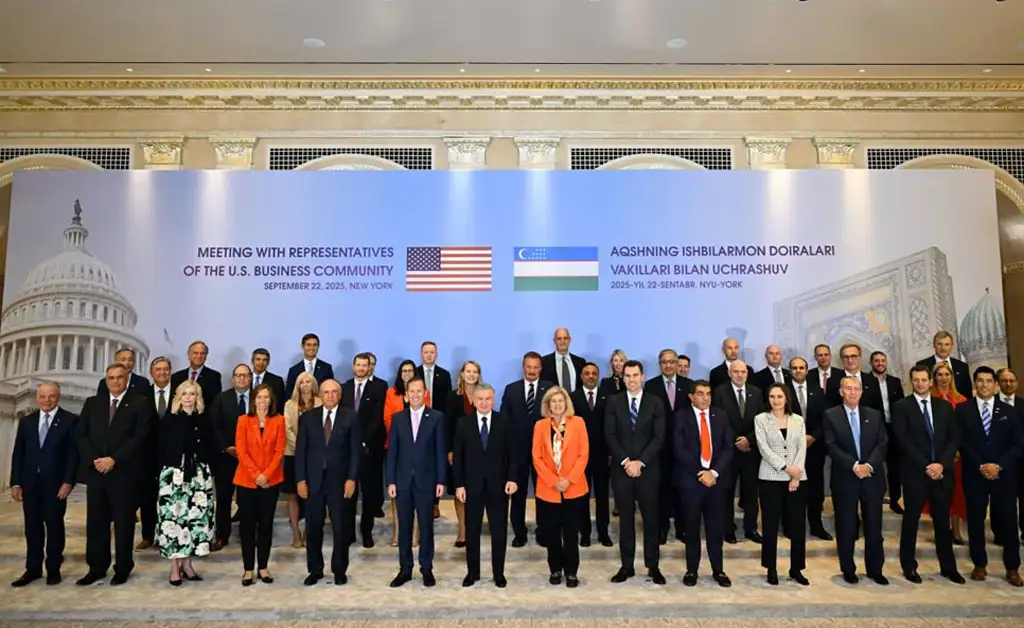
The two countries announced an early harvest of trade commitments on June 25, 2026, during US Trade Representative Jamieson Greer’s visit to Tashkent, including Uzbekistan’s decision to eliminate or reduce tariffs on a wide range of U.S. industrial and agricultural goods. At the same time, Washington and Tashkent agreed to speed up negotiations on an Agreement on Reciprocal Trade and Investment.
The move could become an important milestone for businesses on both sides because it addresses not only tariffs, but the wider environment for trade and investment.
Trade Becomes a Central Economic Priority
The proposed framework comes at a time when bilateral goods trade has crossed the $1 billion threshold. U.S. goods trade with Uzbekistan totaled an estimated $1.0 billion in 2025, with American exports rising 24.5% to $474.1 million and U.S. imports from Uzbekistan reaching $574.9 million, according to USTR.
Those figures indicate that the relationship is still relatively small compared with the scale of the two economies, but the growth rate suggests significant room for expansion.
A reciprocal agreement could provide a more predictable framework for companies considering longer-term commercial activity.
What Tariff Changes Are in the US-Uzbekistan Early Harvest?
The initial trade package includes an “early harvest” of tariff commitments from Uzbekistan. The country will eliminate or reduce tariffs on a broad range of American industrial and agricultural products.
The United States committed to provide favorable consideration in tariff actions for Uzbek industrial and agricultural goods, to the extent appropriate and consistent with U.S. law, although the announcement does not guarantee automatic tariff reductions.
For American exporters, lower Uzbek duties could improve the competitiveness of machinery, equipment, agricultural products and other goods. For Uzbekistan, increased access to U.S. products could support modernization and competition across domestic industries.
How Is Investment Built Into the US-Uzbekistan Relationship?
The trade discussions are taking place alongside new investment mechanisms. A U.S.-Uzbekistan Business and Investment Council began work in April, while a joint investment platform was launched in June.
The platform focuses on areas including energy, infrastructure, critical minerals and manufacturing.
This matters because Uzbekistan is seeking to attract more than conventional portfolio capital. The country wants industrial projects, technology, production capacity and long-term partnerships.
A U.S. business forum in Tashkent drew 193 representatives of American companies, demonstrating the scale of commercial interest.
Critical Minerals and Manufacturing Add Strategic Depth
Critical minerals are an increasingly important part of the economic relationship. Uzbekistan is seeking to develop its mineral resources while increasing domestic processing and industrial capacity.
For American companies, that can create opportunities in exploration, mining technology, processing, equipment and supply chains.
Manufacturing is another area where the relationship could deepen. Uzbekistan’s expanding domestic market and growing industrial base provide a potential platform for companies seeking a Central Asian production or distribution presence.
Why Does the Reciprocal Trade Agreement Matter to Businesses?
Trade agreements matter because companies make investment decisions based on predictability. Tariffs are only one part of the equation. Businesses also consider market access, investment rules, supply chains, regulation and the ability to repatriate capital.
A broader reciprocal trade and investment agreement could therefore provide greater clarity if negotiations ultimately produce detailed and enforceable commitments.
The process is still underway, so the final scope should not be assumed. The current announcements establish a direction rather than a completed agreement.
A Relationship Moving Toward Commercial Scale
The latest developments suggest that U.S.-Uzbekistan economic relations are moving from individual projects toward a broader commercial architecture.
Tariff reductions can increase trade in the short term, while a reciprocal investment framework could support longer-term capital flows. New investment institutions can then help convert interest into specific projects.
For Uzbekistan, the strategy fits a broader economic opening and reform agenda. For the United States, it creates opportunities in a large and rapidly developing Central Asian market.
The next phase will depend on negotiations and implementation. If the two sides successfully translate the current commitments into a comprehensive framework, the result could be a more predictable and significantly larger platform for U.S.-Uzbekistan trade and investment.
US-Uzbekistan Early Harvest at a Glance
| Party | Commitment |
|---|---|
| Uzbekistan | Eliminate or reduce tariffs on a broad range of US industrial and agricultural goods |
| United States | Favorable consideration in tariff actions for Uzbek industrial and agricultural goods, consistent with US law |
| Both | Strengthen investment cooperation; accelerate talks on an Agreement on Reciprocal Trade and Investment |
| WTO | US support for Uzbekistan’s accession |
| Timing | To be memorialized in the coming weeks; no tariff schedule published |
What This Means for Turkish American and Turkic Businesses
US exporters of agricultural products, machinery and industrial goods should watch for the published Uzbek tariff schedule, since the early harvest names no specific product lines yet. Companies already selling to Uzbekistan can prepare by confirming HS codes and current duty rates so they can price quickly once cuts take effect.
Uzbek American and Turkish American businesses can help US firms find distributors and partners as market access improves. The final agreement’s investment rules will matter as much as tariffs for long-term projects. This article is for information only and is not legal advice.
Frequently Asked Questions
What is the US-Uzbekistan early harvest trade deal?
It is a package of trade commitments announced on June 25, 2026. Uzbekistan will eliminate or reduce tariffs on a broad range of US industrial and agricultural goods, and the US will give favorable consideration to Uzbek goods in tariff actions, consistent with US law.
Is the US-Uzbekistan Agreement on Reciprocal Trade and Investment signed?
Not yet. As of the June 25, 2026, announcement, both sides agreed to accelerate negotiations and to memorialize the early harvest commitments in the coming weeks. The final scope of the agreement is still under negotiation.
How large is US-Uzbekistan trade?
US goods trade with Uzbekistan totaled an estimated $1.0 billion in 2025. US exports rose 24.5% to $474.1 million and imports from Uzbekistan were $574.9 million, according to USTR.
Sources
- Office of the US Trade Representative, The United States and Uzbekistan Announce Early Harvest on Trade, Accelerate Agreement on Reciprocal Trade and Investment Talks, June 25, 2026. Accessed November 16, 2026.
- Office of the US Trade Representative, Uzbekistan Trade Summary, n.d.. Accessed November 16, 2026.
Related Coverage
- Uzbekistan’s 8.5% Growth Creates New Opportunities for U.S. Trade and Investment
- Uzbek Capital Heads to the U.S. as Overseas Investment Rules Open New Opportunities
- Uzbekistan Moves to Cut Tariffs on U.S. Goods as Trade and Investment Ties Expand
About the American-Turkic Republics Business Alliance (ATBA)
The American-Turkic Republics Business Alliance (ATBA) is a New York-based nonprofit platform that strengthens trade, investment and business collaboration between the United States and the Turkic republics: Türkiye, Azerbaijan, Kazakhstan, Uzbekistan, Kyrgyzstan and Turkmenistan. Companies and professionals can join the network through ATBA membership.
