
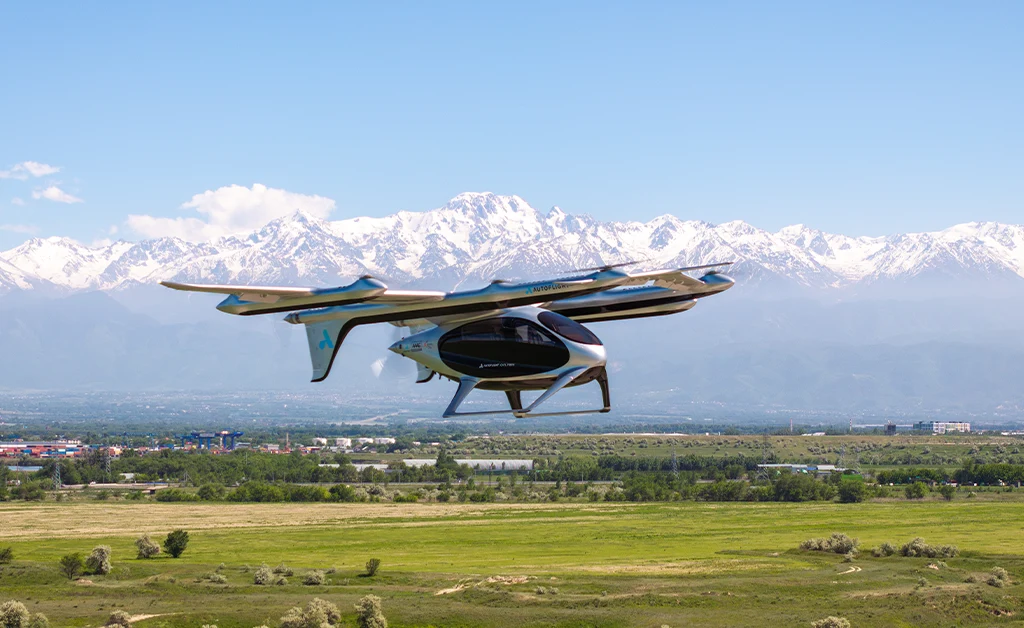
Among the many agreements linking the United States and Central Asia, one points further into the future than the rest. Kazakhstan is turning to American pioneers of electric flight to help it leap into advanced air mobility, a field that barely existed a few years ago. The move is a bold bet that the country can become an early adopter of a technology poised to reshape short distance travel. It is among the most forward looking agreements the two countries have signed, and if the gamble pays off Kazakhstan could help write the rules for an industry that is still taking shape.
A Bold Bet on New Technology
Kazakhstan signed memorandums of understanding worth around 300 million dollars with American companies including BETA Technologies and Joby Aero to develop electric aviation and air taxi services. These agreements sit alongside the country’s larger push into artificial intelligence and digital transformation, part of a strategy to diversify an economy still heavily reliant on oil and minerals. By reaching for the newest sectors, Astana hopes to attract high value investment and skilled jobs rather than simply exporting raw materials.
American Pioneers in Electric Flight
BETA Technologies and Joby are among the leading developers of electric vertical takeoff and landing aircraft, known as eVTOLs. These vehicles promise quiet, emissions free flights over short distances, connecting airports to city centers and linking remote communities without the cost of long runways. For American firms racing to commercialize the technology, Central Asia offers a fresh market and a government eager to move quickly. For Kazakhstan, partnering with established innovators provides a shortcut into an industry that could redefine regional transport.
Building the Ground Network
New aircraft need new infrastructure. Kazakhstan is aiming to become a regional player in urban air mobility, with plans to build six vertiports, the takeoff and landing hubs that air taxis require, by 2028. That ground network would allow electric aircraft to operate across cities and between them, laying the foundation for a commercial service. Building such infrastructure early also positions the country to help set standards and attract further investment as the technology matures across the wider region.
Part of a Wider Digital Ambition
Air taxis over the steppe may sound futuristic, yet they capture the ambition driving Kazakhstan’s partnership with American technology. If even part of the vision succeeds, the country could find itself at the leading edge of a new global industry, with American firms as its partners. The vehicles could also serve medical and emergency flights across the country’s vast and often remote terrain, while vertiports remain relatively cheap compared with airports, an attractive first step for a nation testing a new market. For Astana, the appeal is clear: a chance to move beyond oil and minerals into the industries that will define the century ahead.
