
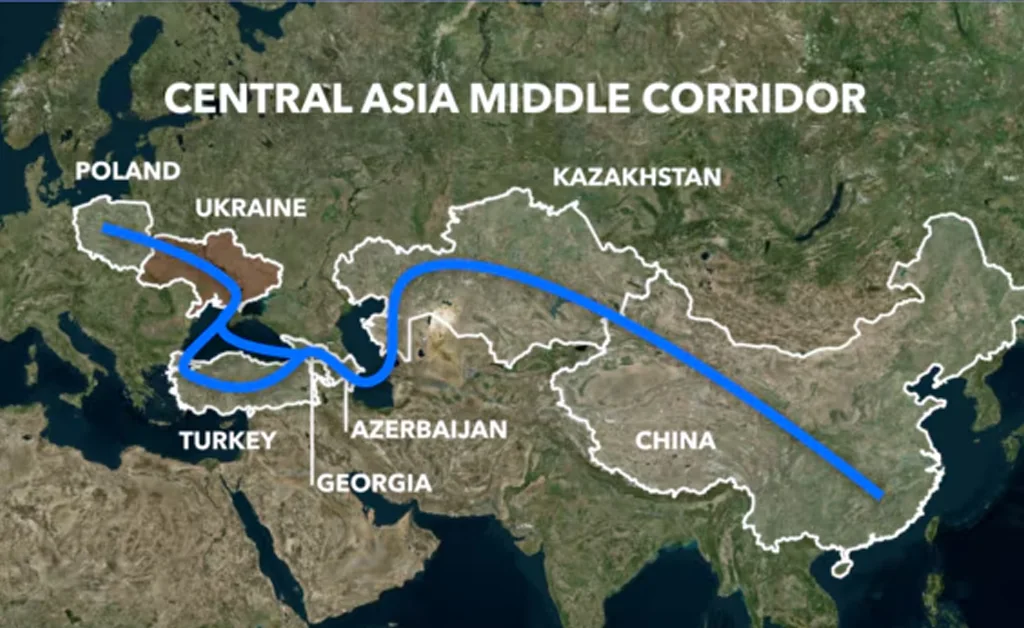
Amid persistent geopolitical instability affecting southern trade corridors and ongoing security challenges in Afghanistan, the strategic importance of the Trans-Caspian International Transport Route—widely known as the Middle Corridor—has surged to unprecedented heights during the summer of 2026. As international supply chains face continuous pressure, Washington and its Western allies are accelerating efforts to bolster geo-economic integration across the South Caucasus and Central Asia, cementing the corridor as a vital, alternative artery for global commerce.
Bypassing Traditional Bottlenecks
For years, international trade between Asia and Europe relied heavily on northern routes passing through Russia or southern paths impacted by regional volatility. However, shifting geopolitical realities have made these traditional pathways increasingly unpredictable. The Middle Corridor—spanning from China through Kazakhstan, across the Caspian Sea, through Azerbaijan and Georgia, and onward into Europe—offers a secure, efficient alternative that completely bypasses these traditional risk zones.
To capitalize on this momentum, Washington is stepping up diplomatic and financial support through targeted frameworks such as the Transport, Regional Integration and Partnership Programme (TRIPP), alongside a series of cross-regional infrastructure investments. These initiatives are specifically designed to eliminate logistical bottlenecks, streamline customs procedures, and upgrade port and rail capacities along the Caspian littoral states.
“The Middle Corridor is no longer just a regional transport alternative; it has evolved into a central pillar of Eurasian trade security,” noted a prominent logistics and trade analyst. “The speed at which infrastructure projects are being synchronized across borders this summer demonstrates a unified commitment to keeping global supply chains moving.”
Modernising Infrastructure and Digitalizing Transit
A major focus of the current Western-backed integration push involves modernizing hard infrastructure and digitalizing transit systems. Investments are pouring into expanding fleet capacities on the Caspian Sea, upgrading rail networks to handle increased container volumes, and implementing electronic customs systems to slash transit times.
By integrating smart logistics and paperless border management, the corridor aims to drastically reduce the days it takes for goods to travel from Central Asian production hubs to European markets. This efficiency boost is making the route increasingly attractive to multinational corporations seeking resilient, diversified supply chain solutions in an uncertain global climate.
Strengthening Regional Sovereignty and Economic Resilience
Beyond its commercial value, the rising prominence of the Middle Corridor carries profound geopolitical significance for the nations involved. By enhancing connectivity between the South Caucasus and Central Asia, the route fosters deeper regional cooperation and economic independence, allowing landlocked economies to diversify their export markets effectively.
As the summer of 2026 progresses, international stakeholders are scheduled to meet at upcoming transport forums to finalize further joint investment packages and regulatory alignments. These ongoing efforts underscore a clear reality: the Middle Corridor is permanently reshaping Eurasian trade, establishing a durable, secure bridge between East and West.
